

Mud Resist
A specially prepared mud-resist paste is applied to selected areas with carved wooden blocks, preventing dye from reaching those portions of the cloth.
What if a textile pattern could carry the marks of earth, hand, block and dye in every repeat?
Earthy brown. Indigo blue. Rust red. Natural cream. Dabu is recognised for its restrained palette, tactile surface and distinctive mud-resist character.
Dabu printing is a traditional hand-block textile technique associated strongly with Rajasthan. Artisans use a mud-based resist to protect selected areas of the fabric before dyeing, creating layered patterns with a characteristic handcrafted depth.
This article explores the Dabu process, resist technique, traditional colours, motifs and the way Dabu-inspired patterns are adapted for modern textile and fashion applications.
Four characteristics give Dabu its recognisable visual language and surface quality.
A specially prepared mud-resist paste is applied to selected areas with carved wooden blocks, preventing dye from reaching those portions of the cloth.
Carved wooden blocks are repeatedly stamped onto the fabric. Accurate registration keeps motifs, borders and repeats aligned across the textile.
Indigo, black, rust, brown and natural tones create the understated palette commonly associated with Dabu-inspired textiles.
Resist, dyeing, drying and washing work together to reveal layered motifs with the slightly irregular character that distinguishes hand printing.
The exact recipe and sequence vary between artisans and workshops, but the core workflow revolves around fabric preparation, mud resist, dyeing, washing and repeated block printing.
Cotton fabric is washed and prepared to remove impurities and improve its ability to absorb the subsequent dyes and resist materials.
A mud-based resist is prepared using locally used ingredients and binders. The mixture must have the right consistency for clean block impressions.
The resist paste is stamped onto the fabric with carved wooden blocks. These protected areas will resist the dye and later reveal the characteristic Dabu pattern.
A fine layer of sawdust or similar dry material may be applied over the wet resist to help protect the printed areas during handling and dyeing.
The fabric is dyed in the required colour bath. Indigo is strongly associated with Dabu, while other colour combinations are also used in contemporary and regional practice.
The cloth is washed to remove the resist and excess dye, then dried. The protected areas emerge as lighter motifs against the dyed ground.
Additional blocks, colours or resist layers can be introduced depending on the design. Registration becomes critical when multiple impressions must align.
The completed textile is washed, dried and finished to reveal the final contrast, texture and repeat of the Dabu pattern.
A simplified visual sequence from prepared fabric to finished Dabu textile.
The actual sequence can change according to the workshop, fabric, dye system, number of colours and complexity of the design.
Dabu is often recognised through a natural, earthy palette with strong contrast between dyed grounds and resist areas.
Warm, natural depth inspired by the mud-resist tradition.
Deep blue ground widely associated with traditional Dabu textiles.
Warm contrast used across many Indian block-print palettes.
Light areas revealed where the resist protected the fabric.
Dabu designs combine small repeated motifs, floral elements and geometric structures to create balanced textile surfaces.
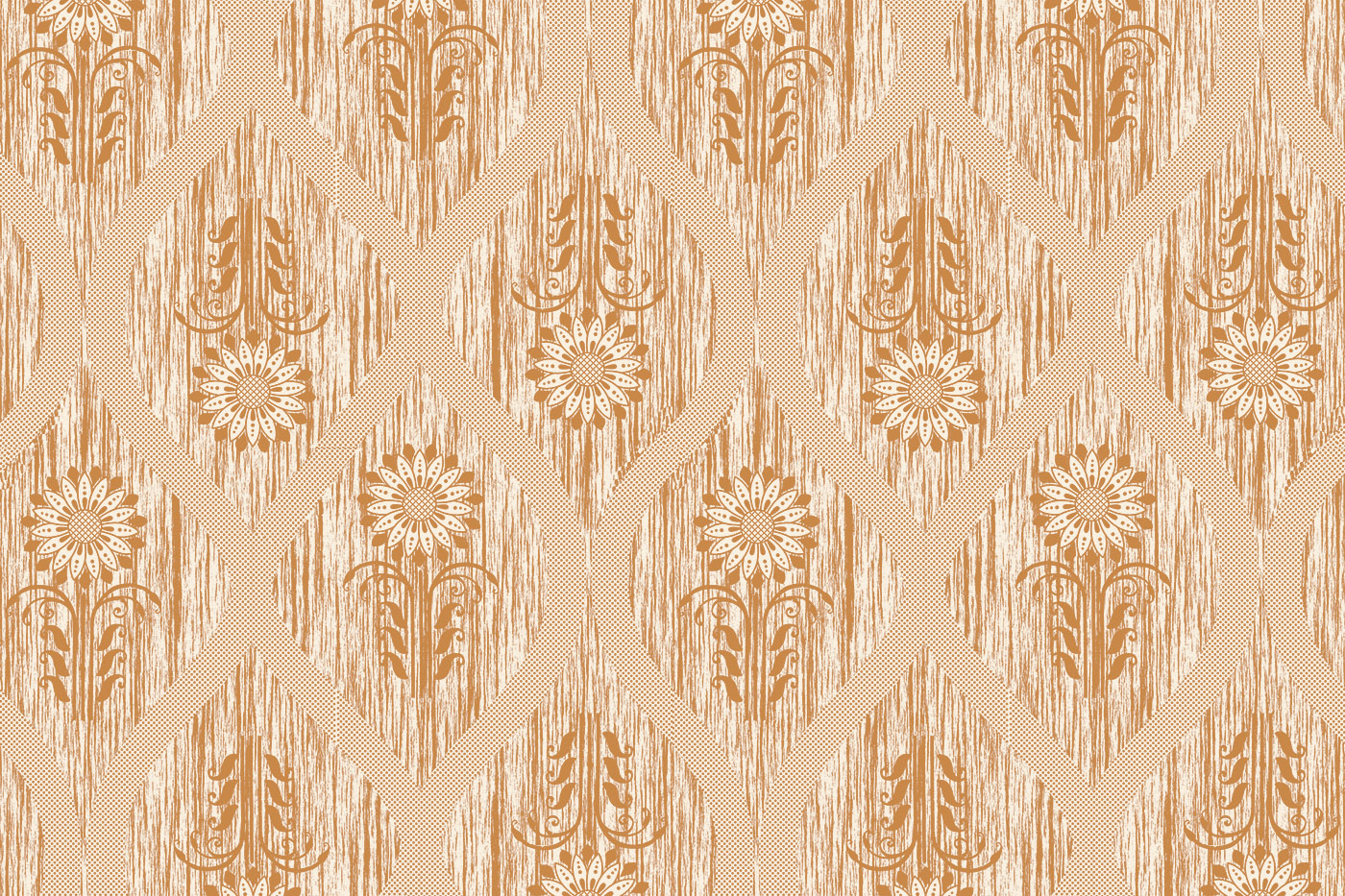
Hand block printing depends on repeatable placement. Small differences in pressure, angle or registration can change the appearance of a motif across a full length of fabric.
With Dabu, the resist itself also has to remain consistent. If the paste spreads, cracks or is printed unevenly, the final dyed pattern will show those differences. This handmade variation is part of the visual character of the craft.
The visual language of Dabu works across heritage clothing, contemporary fashion and digital surface design.
Creating a detailed Dabu-style pattern from scratch — from motif development and repeat construction to colour separation and production preparation — can take many hours of focused design work. For a complete collection or a technically accurate repeat, the workflow can extend into one or more working days.
DesignShatter supplies production-ready Dabu-inspired textile designs for fashion, fabric printing and surface-design workflows. Depending on the product, files can include high-resolution artwork, organised PSD layers, editable colour information and seamless repeat layouts. Designers can download a finished design, make light adjustments to colour, scale or motif placement where required, and move into their own production workflow without rebuilding the pattern from zero.
The practical advantage is time: instead of spending hours constructing every motif and repeat manually, a designer starts from a prepared textile design and focuses on the final adaptation, colour direction and production requirements of the project.
Explore Dabu-inspired patterns for apparel, fabric printing, surface design and contemporary textile collections.
New Dabu-inspired textile designs are introduced on our social channels first. Follow the launch, explore the creative direction, save the design for inspiration, and then find the final production-ready version here on DesignShatter.
Dabu is a traditional mud-resist hand-block printing technique strongly associated with Rajasthan. A mud-based resist protects selected areas of the fabric before dyeing, creating characteristic light motifs against the dyed ground.
Dabu printing is strongly associated with Rajasthan, where traditional artisan communities have developed and maintained regional block-printing practices.
A specially prepared mud-based resist is used to block dye from selected areas. The exact ingredients and preparation can vary between workshops and regional practices.
Indigo, earthy browns, rust or red, black and natural cream tones are commonly associated with Dabu-inspired palettes. Contemporary designs may use wider colour combinations.
Traditional Dabu textiles are produced using carved wooden blocks and hand-applied resist and dye processes. Digital Dabu-inspired designs reproduce the visual language for modern production workflows.
Dabu-inspired patterns can be used for apparel, kurtis, dresses, dupattas, scarves, home textiles, garment panels, seamless repeats and other surface-design applications.