

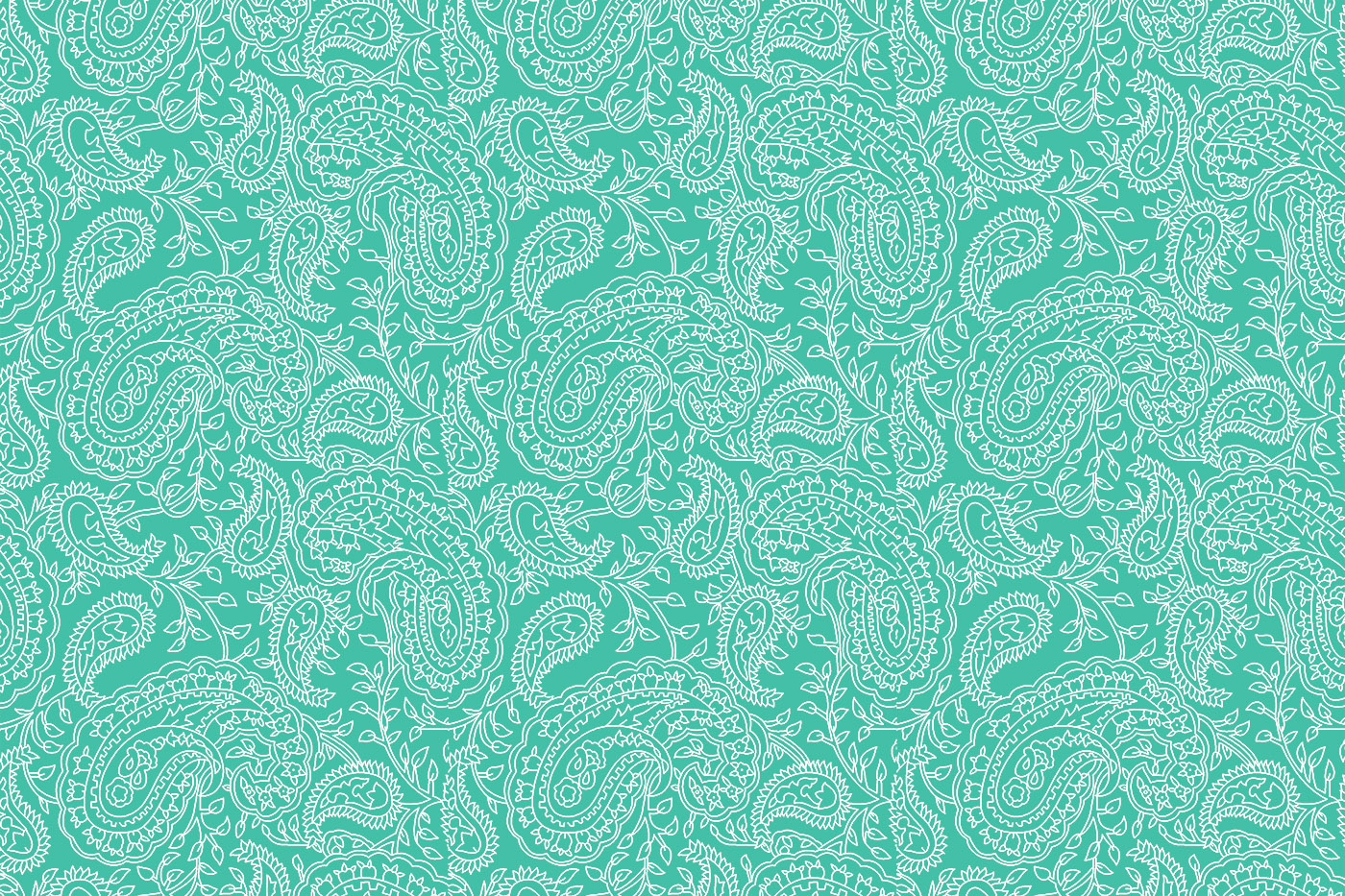

Kalamkari Print: Traditional Indian Art Meets Modern Textile Fashion
Explore Kalamkari Textile Designs
Production-ready Kalamkari-inspired patterns for fashion, fabric printing and contemporary textile collections — combining hand-drawn character, floral ornament, paisley rhythm and the rich visual language of Indian textile art.
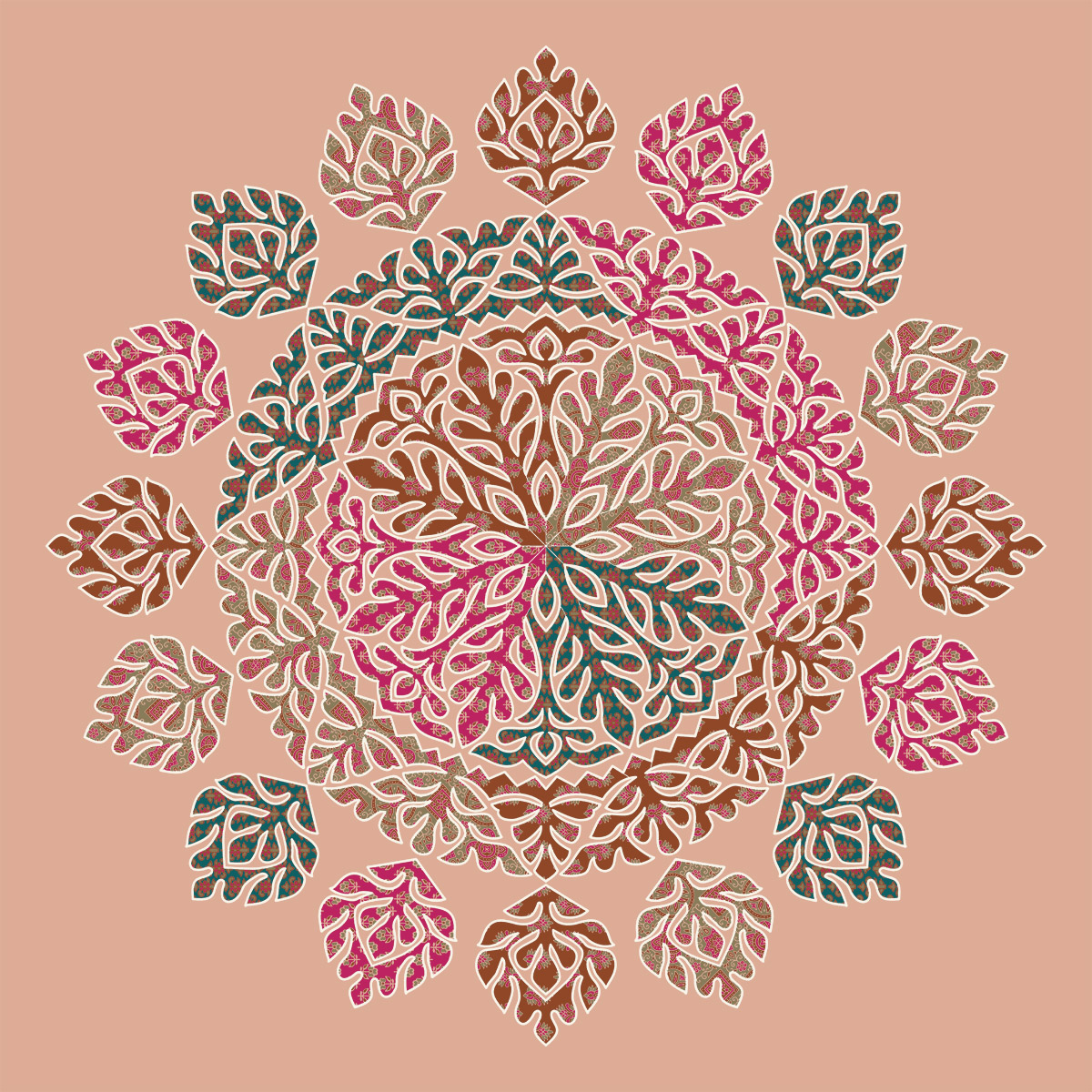
Kalamkari Lotus Mandala
View Design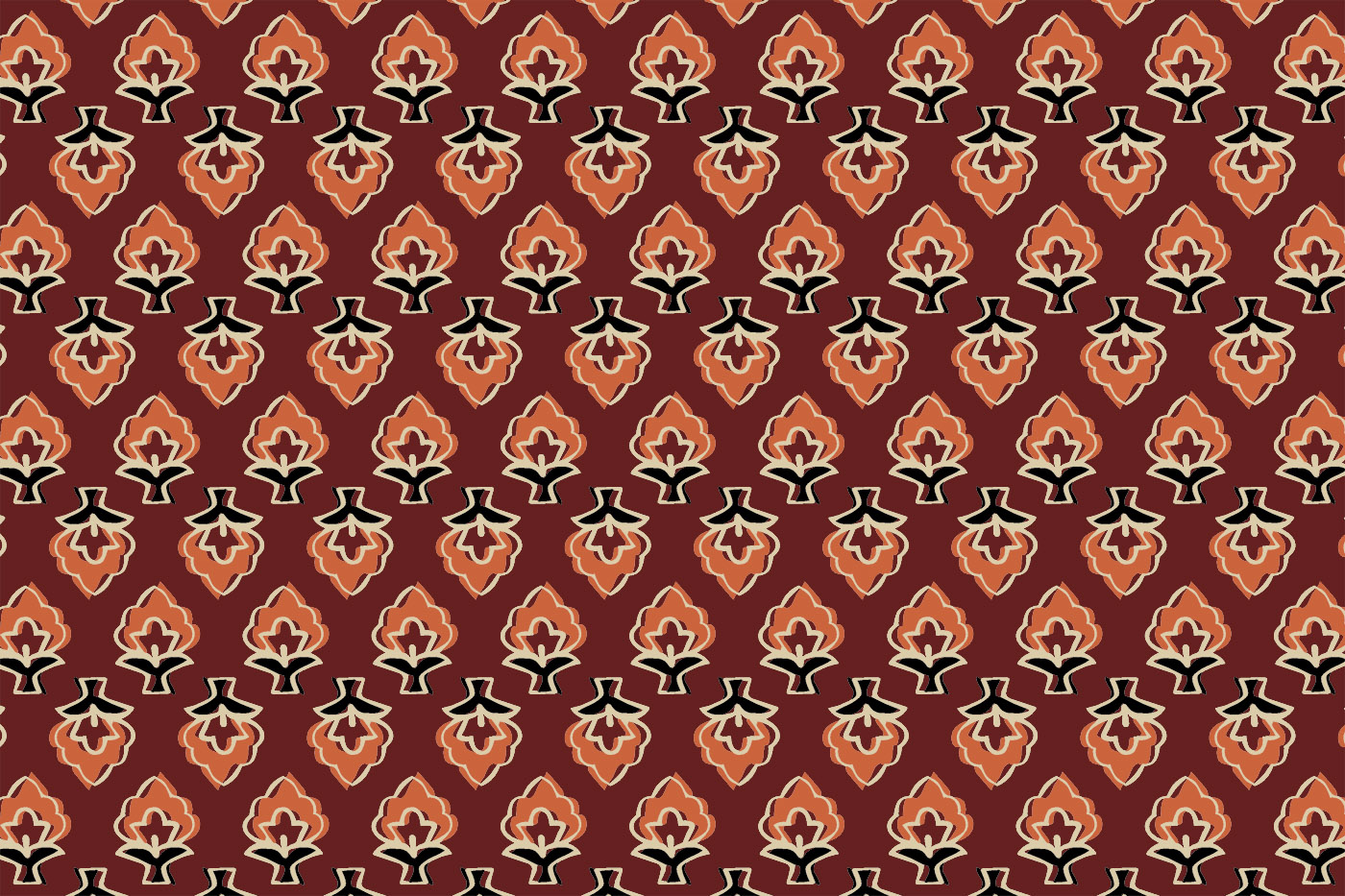
Kalamkari Butta Seamless
View Design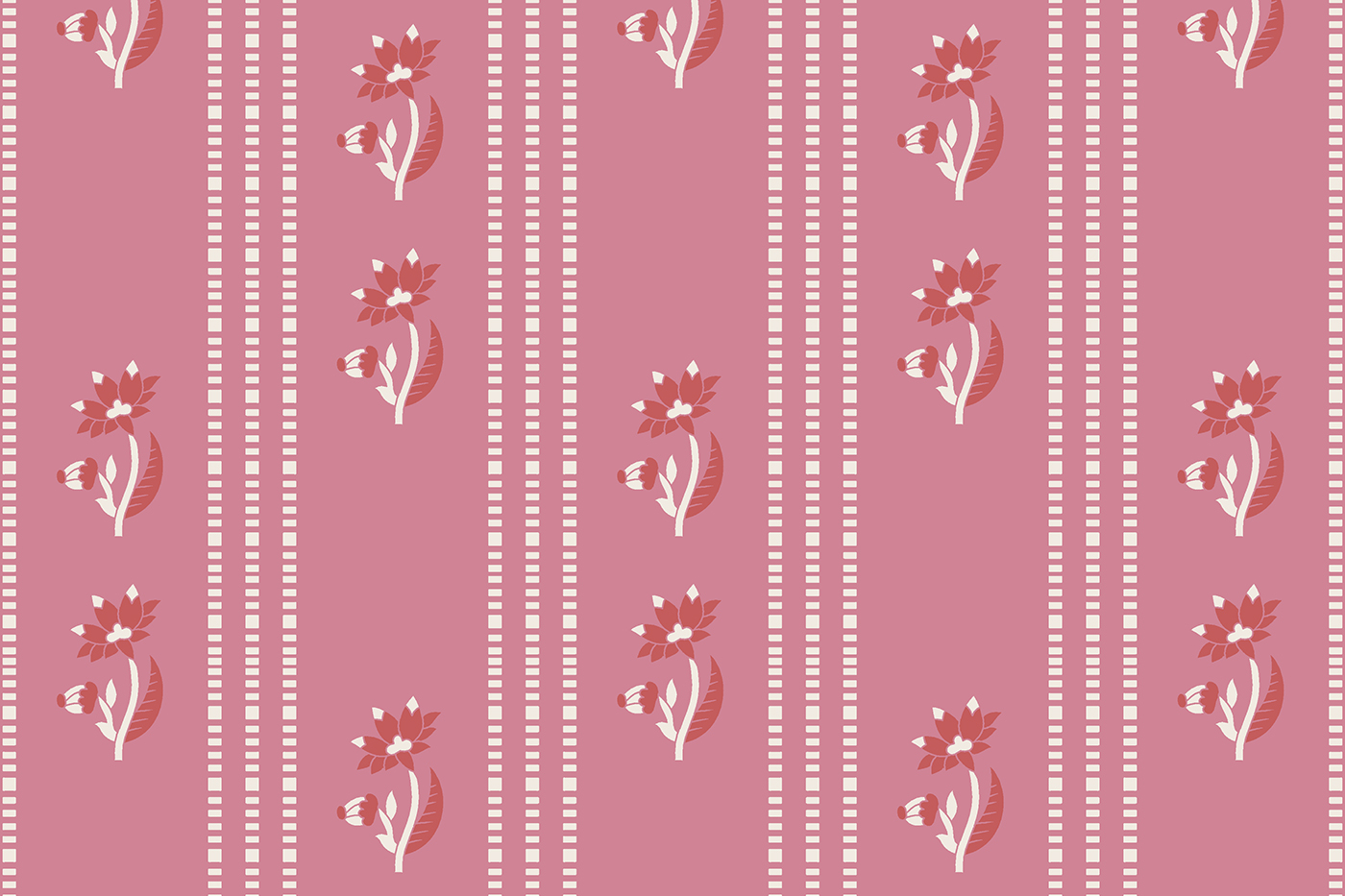
Contemporary Kalamkari Floral Stripe
View DesignKalamkari is not just a floral print — it is a visual language built from line, natural colour, storytelling and painstaking surface detail.
The word Kalamkari is associated with kalam, the pen, and kari, work. Traditional Kalamkari can combine hand drawing, painting, block printing, mordant application, dyeing and repeated washing rather than relying on one single printing action.
The two major Indian traditions commonly discussed are Srikalahasti, strongly associated with freehand pen work and narrative imagery, and Machilipatnam/Pedana, where carved wooden blocks play a major role. Their visual vocabulary can include flowers, vines, paisleys, birds, figures, temple imagery and ornamental compositions.
For modern fashion designers, the attraction is practical as well as aesthetic: the same language can be translated into seamless repeats, butis, borders, jaals, stripes and placement artwork for garments and home textiles.
What Makes Kalamkari Different?
Its identity comes from the relationship between drawing, mordant, dye and layered surface treatment — not simply from the appearance of a floral motif.
✦
Pen-Drawn Character
The kalam allows fine outlines, expressive contours and controlled details. In Srikalahasti practice, freehand drawing can carry the narrative structure of the artwork.
◆
Mordant & Dye
Mordants such as alum and iron-based preparations help create and fix specific colour areas. Natural dye systems have historically used plant, mineral and other locally available materials.
◈
Floral & Narrative Motifs
Paisley, flowering vines, lotus forms, birds, trees, figures and ornamental compositions give Kalamkari a rich vocabulary that works across both heritage and fashion-led collections.
☷
Layered Surface Development
Washing, drying, mordanting, dyeing and colour application happen in stages. The final surface develops gradually rather than appearing from a single print impression.
How Kalamkari Is Made — From Cloth to Finished Artwork
The exact sequence varies by Kalamkari tradition, workshop and design. The following gives a practical view of the core operations described for traditional production.
1
Prepare the Cotton Cloth
The cloth is washed and prepared so the fibre can receive subsequent treatments. Traditional descriptions include treatment with myrobalan and buffalo milk followed by drying; modern workshops may adapt preparation according to production requirements.
2
Establish the Drawing
In pen-worked Kalamkari, the artisan develops the composition using a kalam. In block-printed Kalamkari, carved wooden blocks establish repeated motifs, outlines or background structures.
3
Apply Mordant Areas
Alum and iron-based mordant preparations can be applied to selected parts of the drawing. These areas are prepared to react with later dye baths and create controlled colour development.
4
Develop the Red Family
After mordanting, the cloth may be processed with natural dye materials such as madder or related sources to develop red and warm colour areas. Washing removes unwanted residue before the next stage.
5
Protect & Develop Blue
Traditional processes can use wax or other resist methods to protect selected areas before indigo dyeing. The resist keeps protected sections from taking the blue dye.
6
Remove Resist & Add Secondary Colours
After the required dye stage, resist material is removed and remaining areas can receive colours such as yellow, green and other tonal variations through hand application or further processing.
7
Wash, Dry & Balance the Surface
Repeated washing and sun drying help remove treatment residues and reveal the colour relationships. The surface is checked for clarity, coverage and visual balance.
8
Finish for Textile Use
The finished cloth becomes suitable for apparel, accessories, home textiles or further design development. Contemporary digital Kalamkari-inspired artwork can reproduce the visual vocabulary in repeat and placement formats.
The Kalamkari Process at a Glance
A simplified production map showing why Kalamkari develops through multiple controlled stages.
Cotton
→Wash
→Myrobalan
→Draw / Block
→Mordant
→Red
→Resist
→Indigo
→Colour Fill
→Wash & Dry
Traditional Kalamkari is multi-stage, and the sequence can differ between Srikalahasti pen-work and Machilipatnam/Pedana block-print practice. The visual result comes from controlled drawing, resist, mordant, dye and washing operations.
The Colour Language of Kalamkari
Natural colour systems give Kalamkari its earthy depth, while contemporary designers can reinterpret the same relationships in commercial colour palettes.
Red
Warm, high-impact areas often developed through mordant and natural dye processes.
Indigo Blue
Deep blue provides contrast and can become a strong ground or accent in contemporary collections.
Black
Used for outlines, definition and visual structure, traditionally associated with iron-based preparations.
Natural Ground
Uncoloured or lightly treated areas create breathing space around dense floral and ornamental detail.
The Design Structure Behind Kalamkari
Unlike a purely geometric repeat, Kalamkari often grows from a hierarchy of motifs — a main form, supporting foliage, fillers and framing elements.
Central MotifFloral VineOrnamental Frame
- Hero motif — a paisley, lotus, floral medallion, bird or narrative element can establish the visual focus.
- Vine movement — stems and foliage connect isolated motifs and create rhythm across the fabric.
- Fillers — small leaves, flowers and secondary elements prevent empty gaps and help a repeat feel continuous.
- Border logic — ornamental edges can frame a garment panel, dupatta, neckline or textile length.
- Scale control — the same Kalamkari vocabulary can be enlarged for statement garments or reduced for commercial all-over repeats.
Why Kalamkari Works So Well in Fashion
Its dense ornament can be edited into different scales and placements, making the design language useful from everyday ethnic wear to contemporary fashion capsules.
Kurti & Suit Collections
Butta repeats, floral jaals and vertical layouts can be developed for kurti bodies, sleeves, dupattas and coordinated bottoms.
Statement Dresses
Larger botanical or mandala compositions work as fashion-focused all-over patterns or controlled placement artwork.
Yoke & Panel Design
Dense Kalamkari motifs can be isolated into front yokes, center panels, neckline artwork, A-line bodies and sleeve placements.
Dupatta & Border
Floral vines, paisleys and ornamental borders can create clear edge-to-edge compositions without needing heavy embroidery.
Contemporary Western Wear
Reducing motif density and using restrained colourways can move the visual language into shirts, skirts, resortwear and co-ord collections.
Home & Lifestyle
Repeat patterns can also translate into cushion covers, curtains, table linen, bedding, wall panels and other surface-design applications.
Fashion production advantage: DesignShatter Kalamkari files are presented for textile printing and fashion use, with seamless-repeat and editable-channel options on applicable designs.
Kalamkari for Modern Textile Production
The value of a digital Kalamkari-inspired file is not replacing the craft — it is giving designers a production-ready way to use its visual vocabulary in modern workflows.
Fashion Applications
- Kurti and ethnic-wear all-over prints
- Front neckline and yoke placements
- Center panels and A-line body layouts
- Dupatta and border compositions
- Shirts, dresses and co-ord sets
- Seasonal colourway development
Production Applications
- Digital textile printing
- Rotary and screen workflows where artwork is adapted accordingly
- Sampling before bulk production
- Editable colour channels for faster colourway changes
- Seamless repeat development
- Private-label and export-oriented collections
300 DPIHigh-resolution print-ready option on applicable DesignShatter files
PSDOrganised editable channel-based files on applicable products
SeamlessRepeat-ready patterns for continuous fabric printing
ColourwaysChannels support faster colour refinement and separation
Ready-to-Print Kalamkari Designs — Faster Sampling, Faster Collections
Building a detailed Kalamkari-inspired pattern from scratch requires motif development, repeat construction, colour planning and production preparation. A ready design reduces that initial development work and lets a designer focus on collection direction and garment execution.
DesignShatter Kalamkari products are available in production-oriented formats. Applicable listings include high-resolution 300 DPI PSD files, editable channels, seamless repeats and commercial-use options. One current Kalamkari product is listed at $1.99, while free commercial designs are also available in the category.
For custom textile design requests, the current DesignShatter request flow lists Standard Delivery at 7–10 working days, Express at 3–5 working days, and Urgent / Fast Track at 1–2 working days, depending on the selected requirement.
$1.99Current listed price on an applicable Kalamkari design
300 DPIPrint-ready resolution on applicable files
7–10Working days — standard custom request
1–2Working days — urgent / fast track request
Kalamkari Designs for Your Next Collection
Explore actual Kalamkari patterns from the DesignShatter collection and use the visual language for fashion, surface design and textile development.
Kalamkari Print — Frequently Asked Questions
What is Kalamkari print?
Kalamkari is a traditional Indian textile-art practice associated with pen drawing and/or block printing, natural dyes and multi-stage cloth treatment. The two major styles commonly discussed are Srikalahasti and Machilipatnam.
What is the difference between Kalamkari and ordinary floral print?
A normal floral print may simply reproduce a floral motif on fabric. Kalamkari has a distinctive craft language involving line work, ornamental composition, mordant/dye processes and historically natural colour systems.
Is Kalamkari useful for modern fashion?
Yes. Kalamkari-inspired motifs can be adapted into all-over repeats, butis, borders and placements for kurtis, suits, dresses, shirts, dupattas, co-ords, resortwear and accessories.
Can Kalamkari designs be used for seamless fabric printing?
Yes, when the selected digital artwork has been constructed as a seamless repeat. Several DesignShatter Kalamkari listings explicitly provide seamless-repeat and production-ready information.
What file formats and resolution are available on DesignShatter?
Applicable Kalamkari listings include PSD files, editable channels and 300 DPI high-resolution production files. Exact specifications vary by individual design, so check the product listing before download.
How much does a Kalamkari design cost on DesignShatter?
Pricing varies by product and license. One current Kalamkari Lotus Mandala listing shows a Commercial License at $1.99, while the Kalamkari category also contains free commercial designs.
How long does a custom textile design request take?
DesignShatter currently lists Standard Delivery at 7–10 working days, Express Delivery at 3–5 working days and Urgent / Fast Track at 1–2 working days for custom requests, subject to the selected requirement.
Latest Post


