

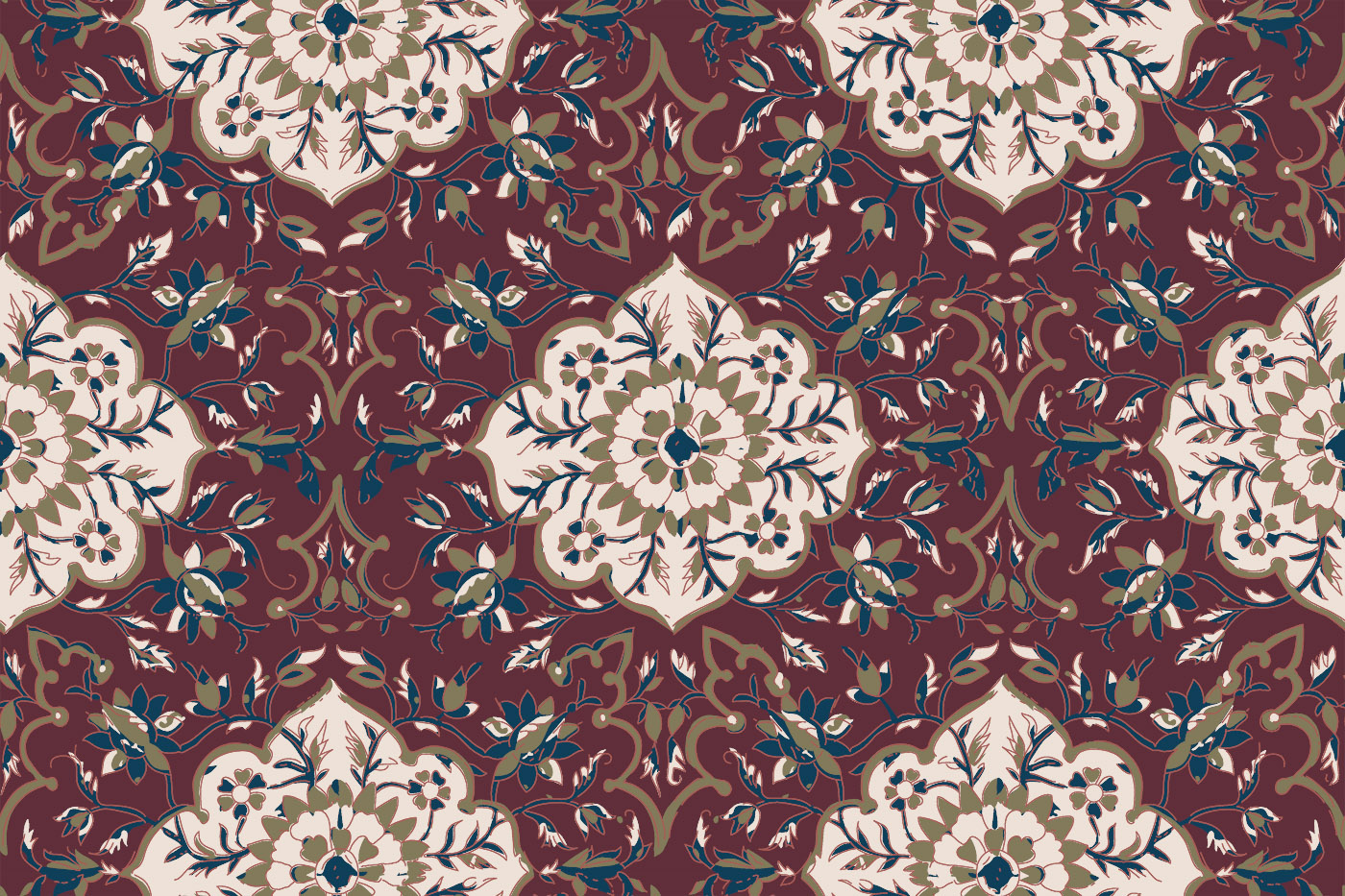

Damask Print: Ornamental Textile Patterns for Luxury Fashion & Fabric Design
Explore Damask Textile Print Designs
From ornate medallions and scrolling arabesques to classic repeats and decorative borders, damask textile prints remain one of fashion and interiors' most versatile surface-design languages.
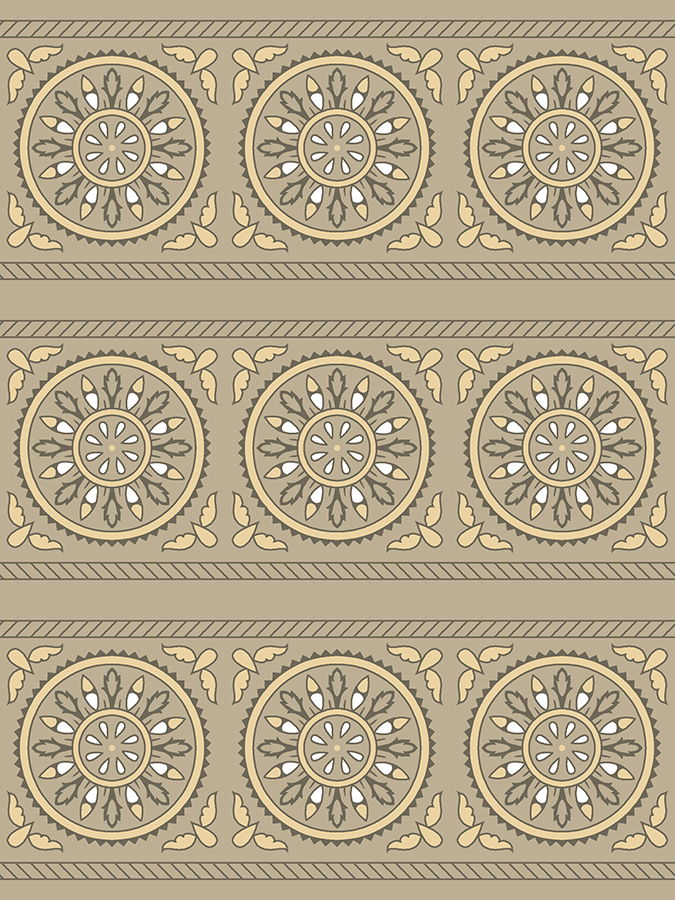
Mint Damask Ornamental Repeat
View Design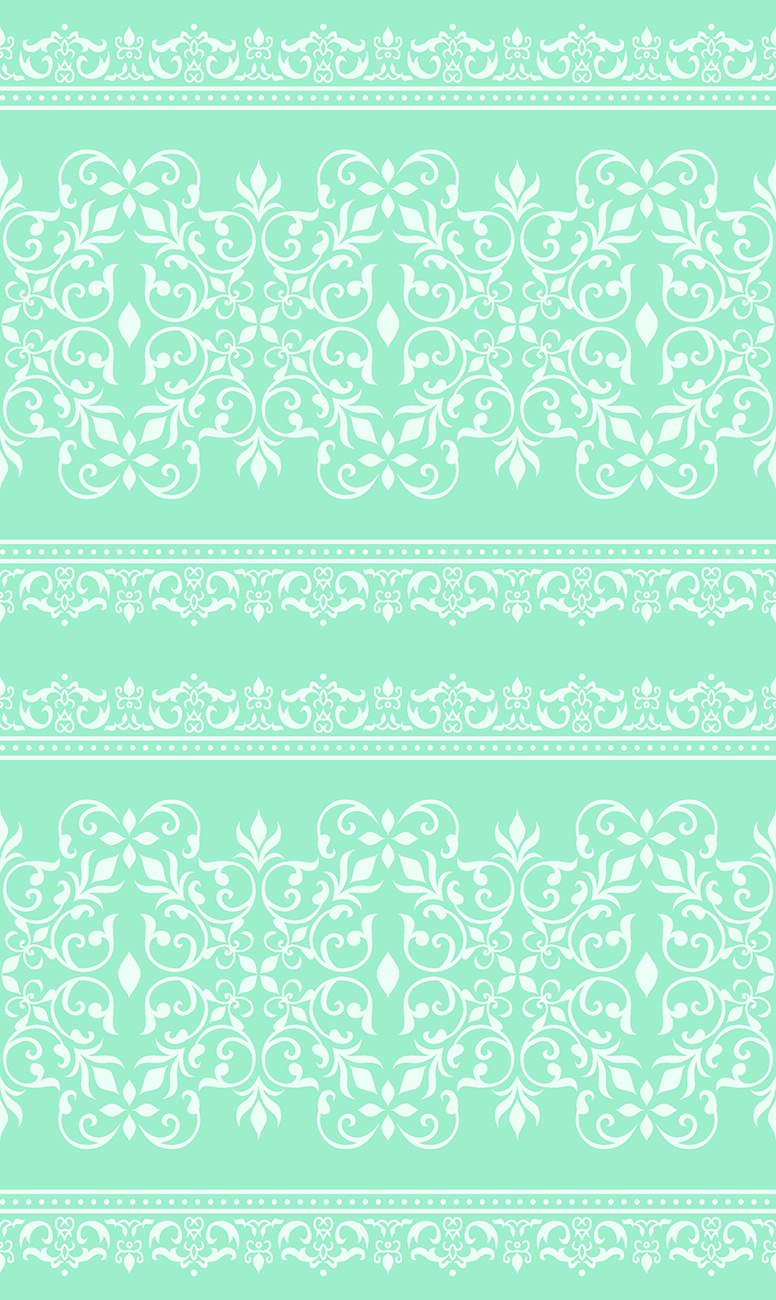
Midnight Ornate Damask
View Design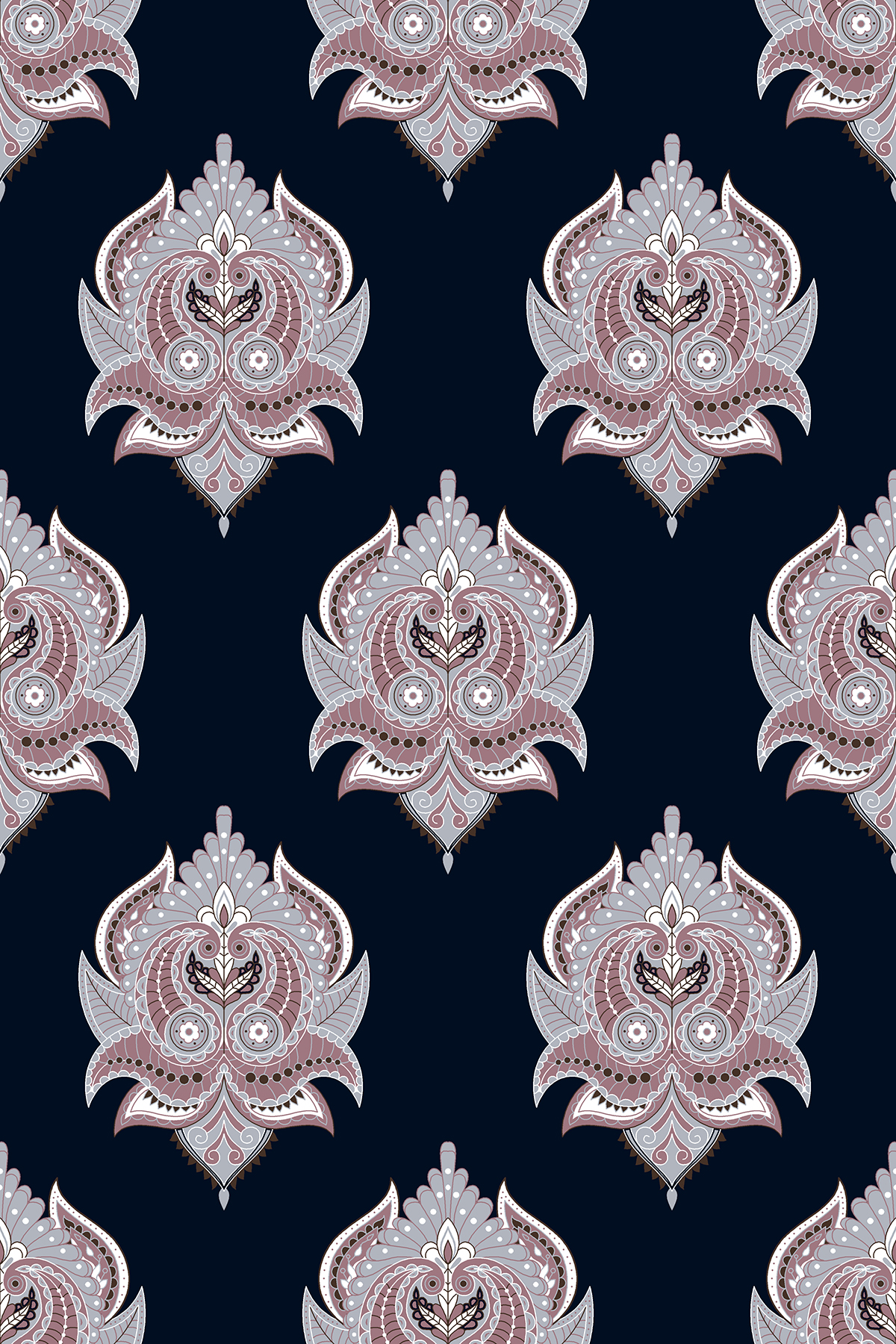
Ornamental Damask Stripe
View DesignClassic Damask Allover
View DesignDamask Mini Motif
Explore Damask CollectionWhy do damask prints remain a classic in fashion and interiors? Because a well-built ornamental motif can change the character of a fabric through symmetry, scale, rhythm and surface richness.
Damask textile prints can be dense or open, symmetrical or flowing, traditional or contemporary. Their ornamental character makes them useful for luxury apparel, ethnic wear, furnishings and statement fashion collections.
In damask design, the motif is only one part of the system. The real design decision is how medallions, scrolling vines, palmettes and fillers are arranged through an all-over repeat, stripe, panel or engineered placement. The same ornamental vocabulary can therefore create very different fabric outcomes.
This guide explains how damask print design works as a textile system, how motif scale and repeat affect garments and interiors, and why production-ready damask patterns are useful for fashion designers, garment manufacturers, exporters and fabric printers.
What Makes a Damask Textile Print Work?
A successful damask pattern is not simply a collection of ornaments. Motif scale, symmetry, spacing, rhythm, colour and repeat structure determine how it behaves on fabric.
✿
Ornamental Character
Medallions, palmettes, acanthus leaves, arabesque scrolls, rosettes and stylised foliage create different levels of luxury and formality. The drawing style controls whether a print feels heritage, royal, contemporary or minimalist.
◈
Scale & Density
Large medallions create statement surfaces, while small damask motifs and compact repeats produce a quieter commercial effect. Density also affects how much ground fabric remains visible.
▦
Repeat Structure
All-over, mirror, half-drop, stripe and engineered layouts distribute damask motifs differently. Symmetry and repeat alignment must remain visually balanced when the fabric runs continuously.
☼
Colour Direction
Colourway can move one damask design from soft pastel fashion to earthy ethnic wear or high-contrast contemporary apparel. Editable colour structures are especially useful during collection development.
How a Damask Textile Print Is Developed
Damask surface design is built through a sequence of visual decisions rather than simply placing ornamental illustrations on a page.
1
Choose the Damask Direction
Define the collection mood first: heritage, Mughal-inspired, European ornamental, regal, contemporary or minimal. This keeps the motif language visually consistent.
2
Develop the Motif
Medallions, scrolls, leaves, palmettes and supporting fillers are drawn or refined into a repeat-friendly design unit. Motif detail should match the intended fabric scale and printing method.
3
Build the Layout
The motif can be arranged as an all-over repeat, mirrored layout, medallion field, stripe, border or engineered placement. Layout determines how the design reads across a garment or interior surface.
4
Control the Repeat
Repeat boundaries are constructed so that edges connect cleanly. A seamless repeat is critical for continuous fabric printing and prevents visible breaks between repeat units.
5
Develop Colourways
Colours are selected around the target fabric, season and customer. Multiple colourways can turn one damask artwork into several coordinated collection options.
6
Prepare Print Separations
For production workflows, colour channels, layers or vector objects can be organised so the artwork can be adjusted for screen, rotary, sublimation or digital textile printing as required.
7
Test on Fabric Scale
A damask that looks attractive on screen can behave differently on a 44-inch fabric width or on a finished garment. Sampling checks motif scale, density, symmetry, colour balance and placement.
8
Release for Production
After repeat, colour and scale are approved, the print can move into sampling or bulk production. A production-ready digital file shortens the gap between design development and manufacturing.
The Damask Print Workflow at a Glance
A simple production map from the first ornamental motif decision to a fabric-ready repeat.
Theme
→
Motif
→
Layout
→
Repeat
→
Colourway
→
Separation
→
Sample
→
Production
The final appearance depends on motif scale, fabric width, repeat size, printing technology, colour limits and the intended garment silhouette.
Damask Colourways: From Soft to Statement
A commercial damask collection benefits from multiple colour directions. A broader textile palette helps designers move the same artwork across ivory, jewel, heritage, metallic-inspired, earthy and contemporary fashion stories.
This is a Pantone-style textile colour board for design direction, not a physical Pantone standard. Final production colour should be checked against the approved fabric, printer profile and physical colour standard.
The Design Structure Behind Damask Prints
Damask design becomes commercially useful when motif hierarchy, symmetry and repeat are planned around the fabric, garment or interior surface.
Damask Repeat Construction
HERO MOTIF SUPPORTING ORNAMENT REPEAT TILE GARMENT SCALE
- Hero motif — the main flower or botanical form that establishes the visual identity.
- Supporting elements — leaves, buds, stems, dots and fillers prevent empty or awkward areas.
- Repeat rhythm — spacing and direction determine whether the fabric feels open, dense, formal or playful.
- Scale hierarchy — large blooms can dominate dresses and panels; smaller motifs work well for kurtis, shirts and everyday apparel.
- Placement control — the same damask language can become an all-over print, border, yoke, sleeve, center panel or dupatta layout.
Why Damask Prints Are So Useful in Fashion
Damask prints are unusually flexible because they can shift between commercial and premium fashion through scale, colour, density, symmetry and placement. A small ornamental repeat can support a commercial kurti range, while an oversized medallion can become a statement dress, jacket or luxury furnishing fabric.
For garment manufacturers, damask repeats also make collection building easier: one motif family can be developed into all-over fabric, border, yoke, sleeve, dupatta and coordinated accessory applications instead of requiring unrelated artwork for every product.
Kurti & Suit
Buti, ornamental border and neckline placements for everyday and festive collections.
Dresses & Co-ords
Large botanical, tropical and contemporary repeats for western and resort-led silhouettes.
Dupatta & Panels
Engineered borders, center panels and damask placements for coordinated garment design.
Damask Prints for Modern Textile Production
A good digital damask file is useful because the artwork can be adjusted without rebuilding the entire pattern from scratch.
Fashion Applications
- Kurti, salwar suit and ethnic sets with ornamental repeats
- Dresses, jackets and western apparel
- Shirts, tops and co-ord sets
- Dupattas, scarves, stoles and panels
- Yoke, neckline, sleeve and panel placements
- Luxury, festive and seasonal collections
Textile & Home Applications
- Continuous fabric printing
- Bedsheets and pillow covers
- Cushion and curtain fabrics
- Table linen and soft décor
- Wallpaper and surface design
- Sampling and private-label collections
300 DPIHigh-resolution option on applicable files
PSDLayers & editable channels on applicable designs
SeamlessRepeat-ready patterns for continuous fabric
RGB / CMYKColour profiles on applicable production files
Ready-to-Print Damask Designs — Faster Sampling, Faster Collections
Developing a commercial damask pattern from scratch can involve motif drawing, repeat construction, colourway development, symmetry checks, scale testing and production preparation. A ready-made textile pattern removes much of that repetitive setup work.
DesignShatter damask listings include production-oriented options such as PSD files, editable layers/channels, seamless repeat patterns and high-resolution print files on applicable products. A current Royal Damask Medallion listing shows a Commercial License at $1.99, while a Ornamental Damask Stripe listing currently shows a reduced Standard Print price of $3.99; pricing varies by product and license. urlExplore the Damask collectionhttps://designshatter.com/collection/classic-evergreen-fashion-prints/damask
For custom textile design requests, DesignShatter currently lists Standard Delivery at 7–10 working days, Express at 3–5 working days, and Urgent / Fast Track at 1–2 working days, depending on the selected requirement.
Current DesignShatter Offers: Buy 3 Designs & Save 25% — Use Code DSBUY3SAVE25 • New User? Get 10% OFF — DSWELCOME20 • Buy 3+ Designs & Save 50% — FREEDOM50
$1.99Current listed price on an applicable Damask design
$3.99Current reduced price shown on an applicable Damask design
7–10Working days — standard custom request
1–2Working days — urgent / fast-track request
Damask Designs for Your Next Fashion Collection
Explore actual damask textile patterns and choose the layout that fits your garment, fabric or interior requirement.
Damask Print — Frequently Asked Questions
What is a damask textile print?
A damask textile print uses ornamental motifs such as medallions, scrolls, palmettes, rosettes and stylised foliage on fabric. The motifs can be arranged as all-over repeats, mirrored layouts, stripes, borders or engineered placements.
What is the difference between a damask print and a damask pattern?
In textile practice, the terms overlap. “Damask print” commonly describes the motif theme on fabric, while “pattern” can refer more broadly to the repeat structure, layout and visual system used to distribute those motifs.
Why are damask prints important in fashion?
Damask motifs can be adapted across many scales and aesthetics, from small commercial butis to large statement botanicals. That makes them useful for kurtis, suits, dresses, shirts, co-ords, dupattas, resortwear and accessories.
Can damask designs be used for seamless fabric printing?
Yes. When the artwork is constructed as a seamless repeat, the damask unit can continue across the fabric width without visible breaks. DesignShatter listings marked as seamless are intended for this type of continuous textile application.
What file formats and resolution are available on DesignShatter?
Applicable Damask listings include PSD files, editable layers/channels and high-resolution 300 DPI production files. Exact specifications vary by product, so check the individual listing before download.
How much does a Damask design cost on DesignShatter?
Pricing varies by design and license. Current Damask examples include a Commercial License listed at $1.99 and a Ornamental Damask Stripe design showing a reduced Standard Print price of $3.99.
How long does a custom textile design request take?
DesignShatter currently lists Standard Delivery at 7–10 working days, Express Delivery at 3–5 working days and Urgent / Fast Track at 1–2 working days for custom requests, subject to the selected requirement.
Latest Post


