

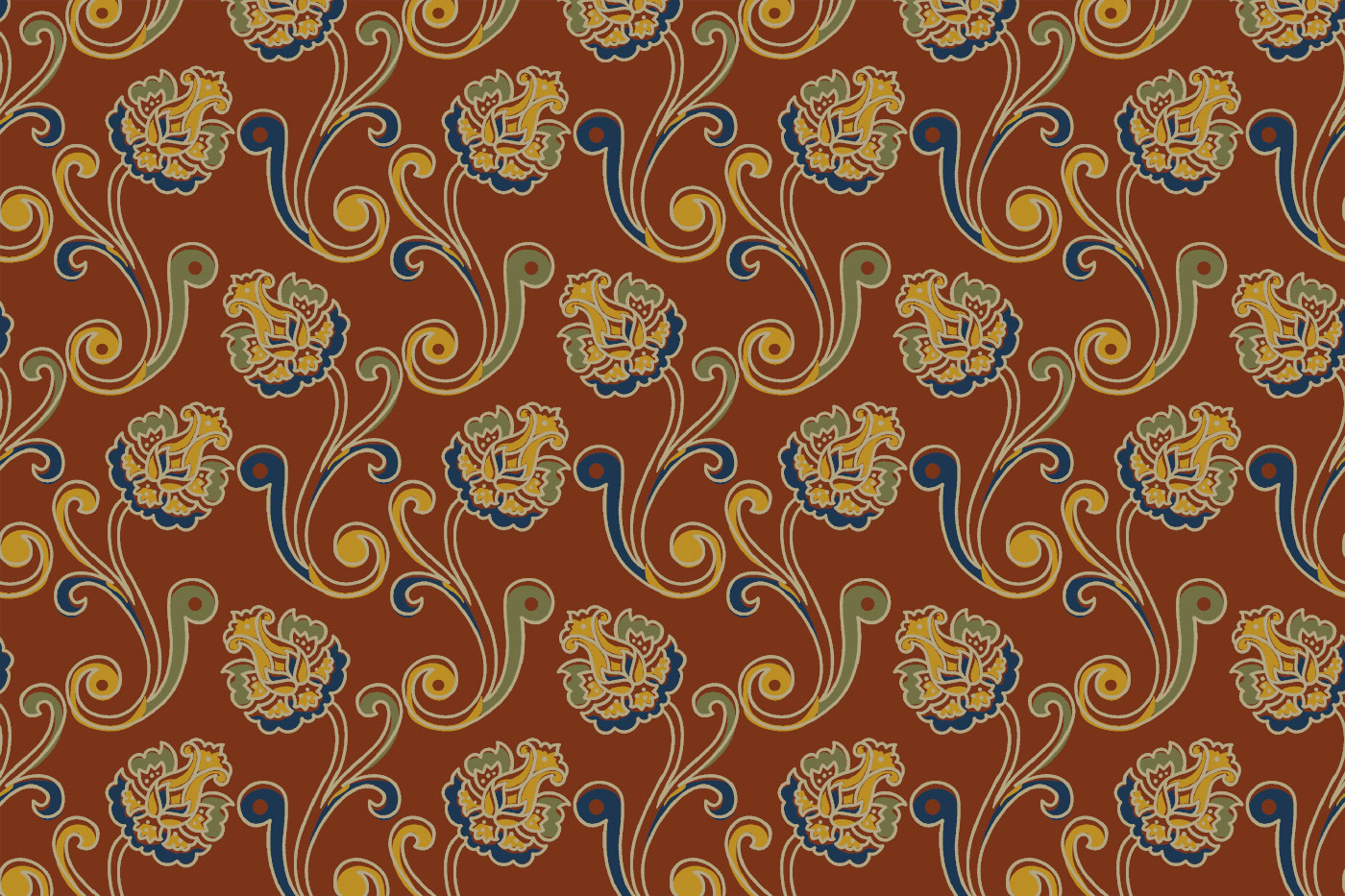

Paisley Print: Timeless Motifs in Indian Fashion & Textile Design
Explore Paisley Print Designs
Timeless Paisley and Ambi textile patterns for fashion, fabric printing and contemporary surface collections — from elegant Buta and Jaal layouts to richly detailed floral Paisley repeats.
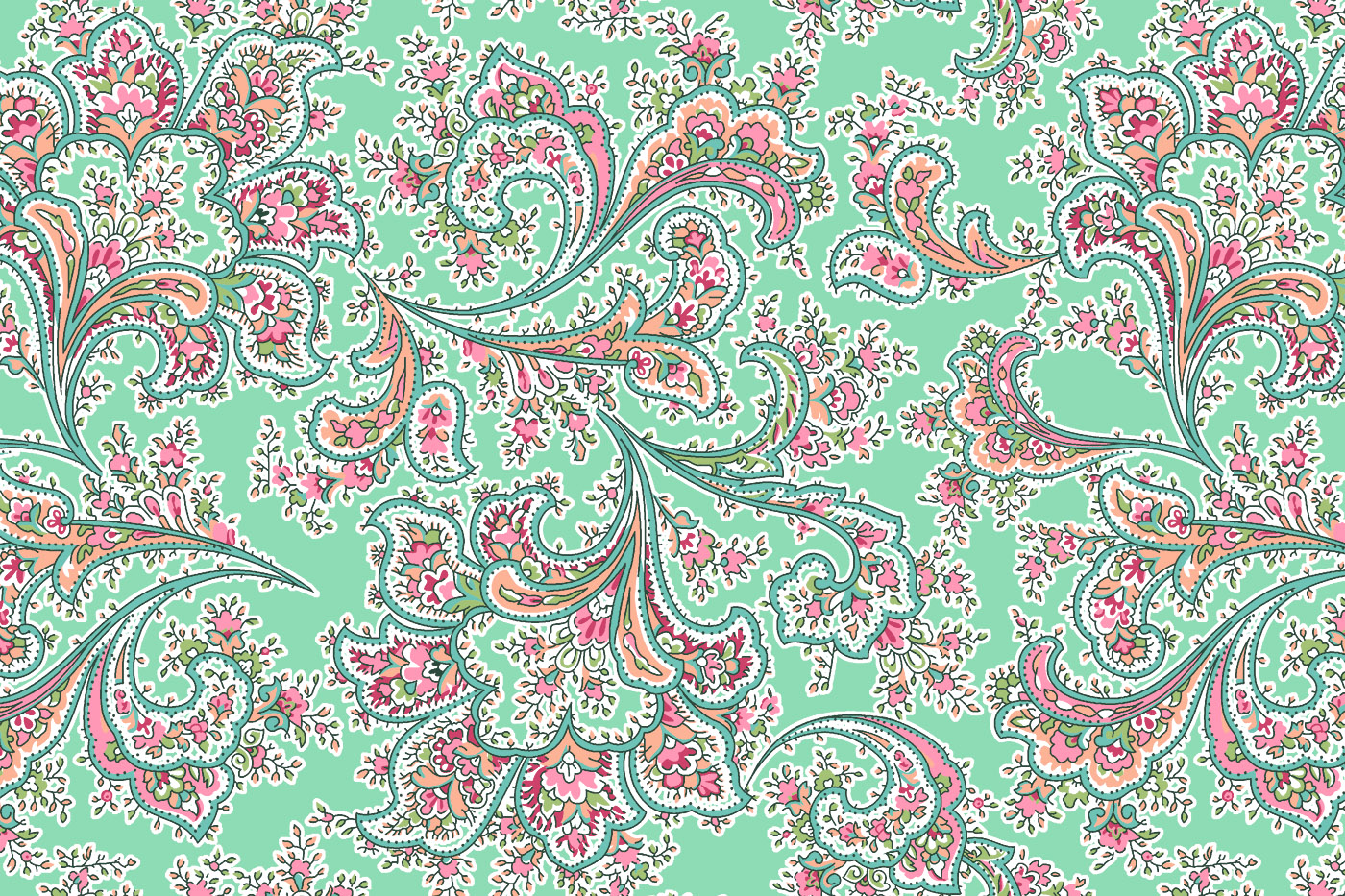
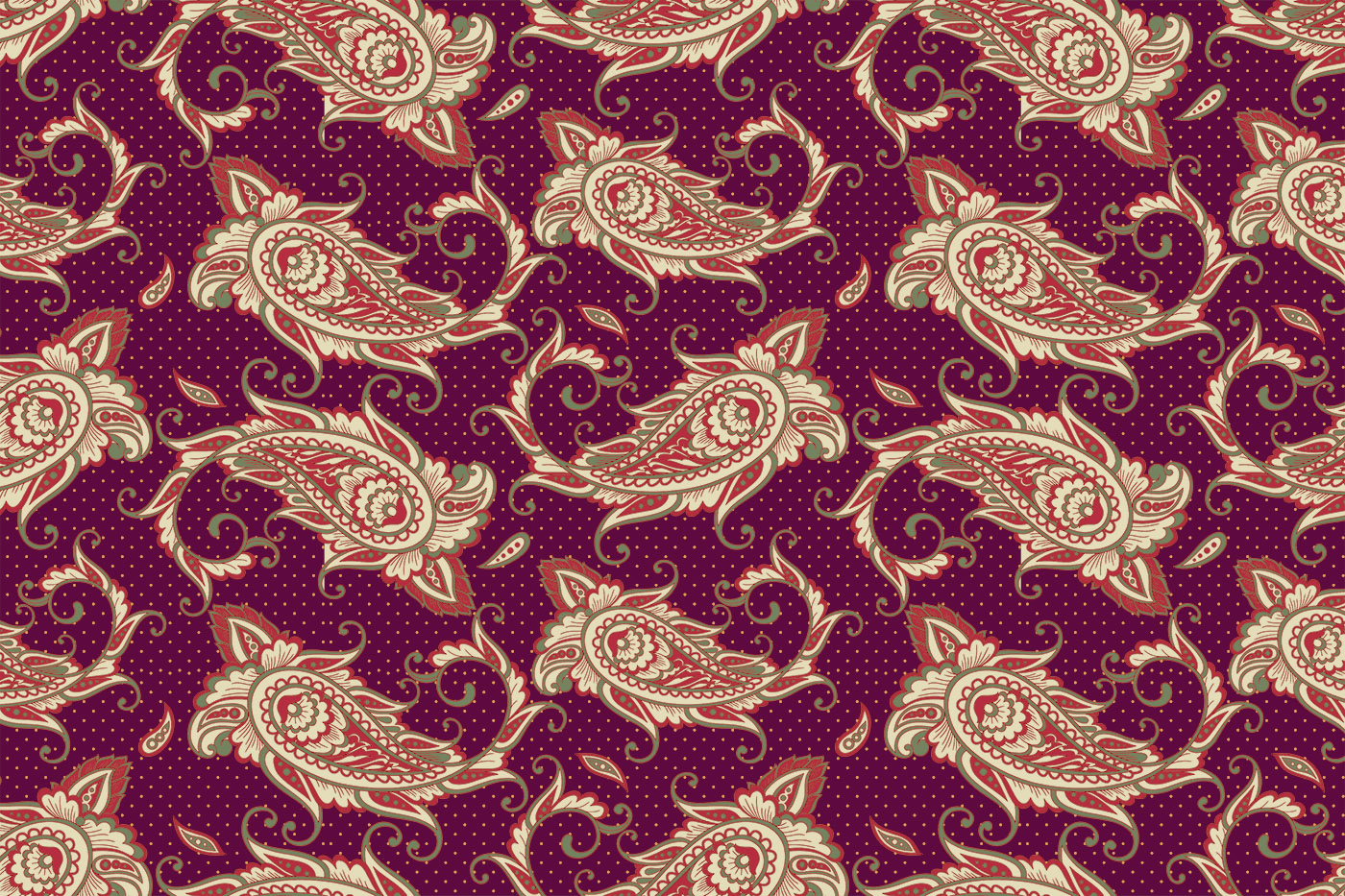
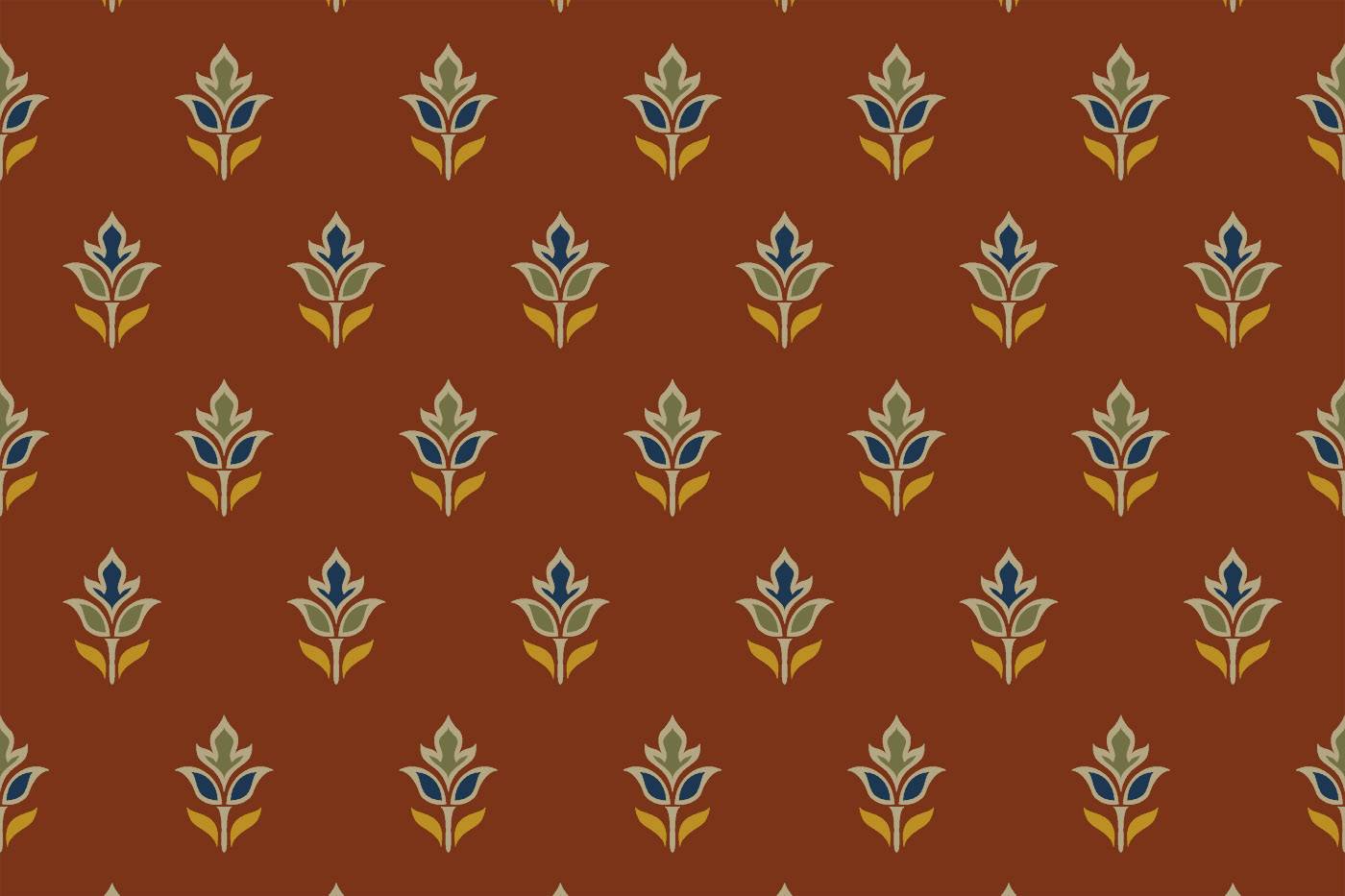
What makes Paisley one of the most enduring motifs in textile design?
Paisley — widely known in India as Ambi or Kairi — has a distinctive curved silhouette that can be scaled, mirrored, rotated and enriched with floral or ornamental detail.
In textile design, the motif can become a single Buta, a repeating Jaal, a border, a placement or a complete all-over surface. Its teardrop body gives designers a strong central form while the inner details create room for florals, vines, dots, leaves and ornamental linework.
This article explores the structure of Paisley prints, common layouts, colour direction, production applications and how Paisley-inspired digital designs can be used for modern fashion and textile collections.
What Makes Paisley Print Different?
The power of Paisley comes from a simple outer silhouette combined with almost unlimited internal decoration.
❧
Signature Curved Silhouette
The recognisable teardrop or curved form creates an immediate visual identity and works across small Buti, medium repeats and large statement placements.
✦
Floral & Ornamental Detail
Flowers, leaves, vines, dots, stems and decorative linework can be layered inside the Paisley body to create anything from minimal to highly ornamental surfaces.
◆
Flexible Repeat Structure
Paisley can be arranged as a Jaal, scattered Buta, directional stripe, border or seamless all-over repeat depending on the garment and fabric width.
◈
Strong Fashion Versatility
The motif can move between traditional ethnicwear, contemporary fashion, accessories and home textiles without losing its recognisable character.
How a Paisley Print Is Built
A successful Paisley textile design normally develops from the main silhouette into detail, repeat and production layout.
1
Define the Paisley Silhouette
Start with the outer Ambi form. The balance between the rounded base, pointed tip and internal curve determines the personality of the motif.
2
Build the Internal Motif
Add floral, botanical, ornamental, dotted or geometric details inside the Paisley body. These details establish the visual richness of the design.
3
Create Supporting Elements
Leaves, vines, flowers and miniature motifs can be placed around the main Paisley to connect individual elements and improve repeat flow.
4
Choose the Layout
Convert the motif into a Buta, Jaal, border, panel or all-over repeat. The layout should match the intended garment or fabric application.
5
Develop the Colourway
Test heritage palettes, contrast combinations and contemporary colourways while keeping the Paisley outline and internal details clearly readable.
6
Prepare the Production File
Set the repeat, scale, colour structure and resolution for the intended printing workflow so the design can move from sampling into production.
Paisley Print Layouts at a Glance
The same Paisley vocabulary can produce very different textile surfaces simply by changing scale and arrangement.
Paisley Motif
→
Floral Detail
→
Buta
→
Jaal
→
Border
→
Placement
→
Allover Print
Scale, spacing and direction can completely change the appearance of a Paisley print while retaining the same core motif.
The Colour Language of Paisley Prints
Paisley has no single fixed palette. Its character changes dramatically with the background, outline and internal colour hierarchy.
Indigo & Blue
Creates a refined heritage direction and works strongly for ethnicwear, contemporary prints and deep contrast layouts.
Rust & Maroon
Warm, traditional tones that give Paisley a rich festive and handcrafted textile character.
Black & Charcoal
Sharpens ornamental details and creates a modern, premium direction for fashion and accessories.
Ivory & Natural
Soft neutral grounds allow detailed Paisley motifs to breathe and suit premium minimal collections.
The Structure Behind Paisley Jaal & Ornamental Prints
A Paisley Jaal is not simply a collection of motifs. The relationship between motif direction, spacing, floral detail and negative space determines how the entire fabric surface reads.
- Primary Paisley — The main Ambi silhouette establishes the visual scale and direction.
- Internal Ornament — Floral, botanical and line details create depth inside each motif.
- Secondary Motifs — Small leaves, flowers and dots fill gaps without overcrowding the repeat.
- Direction — Upright, diagonal, mirrored and alternating Paisleys create different movement across the cloth.
- Negative Space — Controlled breathing room keeps detailed Jaal prints usable on garments.
Why Paisley Scale Matters in Fashion
A small Paisley Buti can create an elegant, repeat-friendly surface, while a large Paisley becomes a statement motif for panels, fronts, dupattas and placement layouts. Using the wrong scale can make a design look either too busy or visually weak.
For commercial textile development, scale should therefore be tested against the actual garment area, printing width and fabric construction. A layered digital file makes it easier to adjust motif size, spacing and colour before sampling.
Paisley Prints for Modern Fashion & Textile Projects
Paisley works across both traditional and contemporary product categories because the motif can be simplified, enlarged or heavily ornamented.
Fashion Applications
- Kurtis and ethnicwear
- Shirts, dresses and co-ord sets
- Dupattas, stoles and scarves
- Kurti fronts and placement panels
- Festive and Indo-Western collections
Modern Textile Applications
- Seamless all-over fashion prints
- Digital textile printing
- Bags and accessories
- Home furnishing and upholstery
- Contemporary surface-pattern collections
Collection Development
Build coordinated Buta, Jaal, border and placement versions around one Paisley visual language.
Garment Engineering
Adapt Paisley scale and direction for fronts, sleeves, panels, dupattas and coordinated sets.
Commercial Production
Use editable digital files to test colourways, scale and repeat before fabric sampling and bulk production.
Paisley workflow advantage: motif → colourway → repeat → sampling → production can stay inside one digital design workflow.
Paisley Designs for Modern Textile Projects
Explore Paisley and Ambi designs from DesignShatter for fashion, fabric printing and surface-pattern development.
Current DesignShatter offers: Buy 3 Designs & Save 25% — DSBUY3SAVE25 · New User: 10% OFF — DSWELCOME20
Browse All Paisley Designs →Frequently Asked Questions
What is a Paisley print?
A Paisley print is a textile pattern built around the characteristic curved, teardrop or Ambi-shaped motif, often decorated with floral, botanical or ornamental details.
What is Paisley called in India?
Paisley is commonly associated with names such as Ambi and Kairi in Indian textile vocabulary, depending on regional usage and design context.
What is a Paisley Buta?
A Paisley Buta is a single or repeated Paisley motif used as a relatively independent decorative element across the fabric surface.
What is a Paisley Jaal?
A Paisley Jaal is an interconnected or closely arranged repeat in which multiple Paisley motifs and supporting elements create a continuous textile surface.
Can Paisley prints be used for kurtis and ethnicwear?
Yes. Paisley designs work well for kurtis, suits, dupattas, shirts, dresses, co-ord sets and other ethnic or Indo-Western garments.
Can Paisley designs be used as seamless repeats?
Yes. Paisley motifs can be engineered into seamless all-over repeats when the individual design is prepared for continuous fabric printing.
Why does Paisley scale matter?
Small motifs create quieter all-over surfaces, while large Paisleys create stronger statement effects. Scale should be selected according to garment area, fabric width and intended visual impact.
Are production-ready Paisley digital designs available?
DesignShatter offers Paisley-inspired textile designs with production-oriented files and seamless repeat options where specified on the individual product.
Latest Post


