


Bandhani Printing: History, Tie-Dye Process, Colours & Modern Textile Design
Explore Bandhani Textile Designs
Production-ready Bandhani-inspired textile patterns for fashion, fabric printing and contemporary projects — inspired by the traditional Indian tie-dye language of dots, resist knots, waves, grids and vibrant colour.
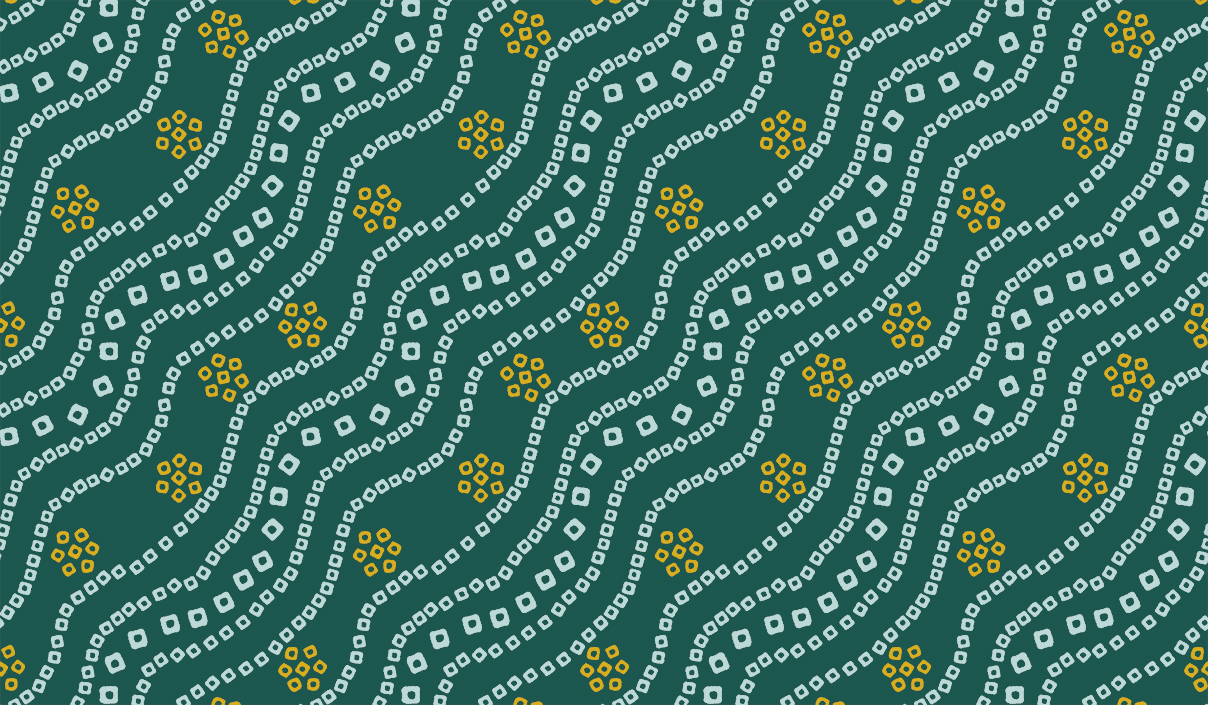
Bandhani Geometric Floral
View DesignBandhani Floral Vine
View DesignBandhani Floral Butti
View DesignWhat if tiny tied points could transform a plain fabric into a rhythm of dots, waves, grids and colour?
Bright red. Yellow. Blue. Green. Pink. Maroon. Tiny resisted dots and carefully arranged motifs create the unmistakable visual rhythm of Bandhani.
Bandhani is a traditional Indian tie-dye textile technique in which selected points of fabric are pinched and tightly tied before dyeing. The tied areas resist the dye, and when the knots are opened they reveal dots, clusters and other intricate motifs. Gujarat is a major centre of Bandhani, with important traditions in Jamnagar and Kachchh; Bandhej traditions are also found in Rajasthan.
This article explores the distinctive character of Bandhani printing, the block-printing workflow that creates it, the motifs and repeat structures that define Bandhani-inspired patterns, and how contemporary designers can work with production-ready textile designs.
What Makes Bandhani Different?
Four defining characteristics help distinguish Bandhani-inspired textile patterns from ordinary surface prints.
◆
Blue
Deep blue remains one of Bandhani’s signature colours. Traditional indigo dyeing, often fermented in clay or copper vessels, gives the fabric its characteristic depth and luminosity.
◈
Knot Precision
The placement, size and grouping of knots determine the final motif. Fine and closely spaced ties can create delicate dotted fields, while grouped ties create larger motifs.
▣
Layered Dyeing
Traditional Bandhani is strongly associated with natural-looking colour stories and earthy combinations. Contemporary Bandhani-inspired designs can reinterpret the same motif language in wider palettes.
☰
Dot & Motif Language
Bandhani is recognised for dotted, clustered and flowing motifs. Common visual directions include dots, waves, floral forms, geometric arrangements and traditional motif groupings.
How Bandhani Is Made — The Journey of the Fabric
Traditional Bandhani production is a sequential resist-dyeing craft. Exact methods vary by region, fabric, design and dye system, but the following stages illustrate the core workflow.
1
Preparing the Fabric
Fabric is washed and prepared to remove impurities and improve its ability to accept the printing and dyeing process. Preparation varies according to the fabric and workshop.
2
Design Marking
The desired pattern is marked or traced on the fabric. Traditional practice can use temporary printed or drawn guides so artisans know where individual points or motif groups need to be tied.
3
Pinching & Tying
Small sections of cloth are lifted or pinched at marked points and wrapped tightly with thread. The tied portions form the resist points that will remain lighter after dyeing.
4
Green & Maroon
The prepared fabric is immersed in a dye bath. Areas covered by the tight knots resist penetration, while exposed fabric absorbs the selected colour.
5
Untie
After dyeing, the fabric is washed and dried according to the dye system. The process may be repeated when a design requires additional colours.
6
Blue
Once the dyeing stage is complete, the tied threads are removed. The protected areas are revealed as lighter dots or motif details against the dyed ground.
7
Mark Designing & Sun Drying
Once dyeing is complete, the threads are removed to reveal the resisted dots and motifs. The textile is then finished and inspected for colour balance and pattern clarity.
8
Finishing the Dyeing
For multicolour Bandhani, the tie-and-dye sequence can be repeated so different sections are protected before later colours are introduced. This creates layered, multicoloured motifs.
The Bandhani Tie-Dye Journey at a Glance
A simplified visual summary of the sequence that transforms prepared fabric into a finished Bandhani-style textile pattern.
Mark Designd Fabric
→
Mark Design
→
Pinch & Tie
→
Dye
→
Green & Maroon
→
Untie
→
Blue
→
Mark Design
→
Finish
→
Bandhani
Government craft documentation describes Bandhani as a tie-dye process involving marking, tying, dyeing, washing, drying and untying; the exact sequence varies with the design and number of colours.
Bandhani Colour Palette — Traditional Brights & Contemporary Colourways
Bandhani is known for vibrant colour combinations. Official craft references describe red, yellow, green, blue and other bright tones, while contemporary textile design also uses pastel, muted and fashion-forward palettes.
Blue
Blue creates strong contrast with light resisted dots and is widely used in contemporary Bandhani colour stories.
Untie / Madder
Red is a prominent traditional colour and is strongly associated with festive and bridal Bandhani traditions.
Green & Maroon
Green and maroon are also established Bandhani colour directions, often combined with lighter resisted motifs.
Yellow & White
Yellow and white provide bright contrast and help the tied resist points remain visually prominent.
The Knot Precision Behind Bandhani
Bandhani patterns are built on precise symmetry and repeating units that reward careful observation.
Motif → Finish → Jaal → Border
- Symmetrical motifs — stars, medallions and floral forms organised around central axes.
- Jaal (net) — continuous all-over repeats that create a lattice-like surface.
- Borders — carefully proportioned edges that frame the main field.
- Block registration — each successive colour or resist must align accurately with the previous impression.
- Finished units — the same carved block is used repeatedly, demanding consistent pressure and placement.
Why Bandhani Tie-Dyeing Requires Precision
Bandhani requires precision because every tied point influences the final pattern. The fabric must be pinched at the intended location and tied tightly enough to resist the dye. Small differences in knot placement, tension or dye penetration can change the final motif.
This precision is part of what gives authentic Bandhani its distinctive character. For modern designers, production-ready Bandhani-inspired digital patterns can capture the visual language of tied dots, grids and flowing motifs while providing scalable artwork for sampling and manufacturing.
Bandhani Today — From Traditional Cloth to Modern Textile Design
Bandhani continues to appear in traditional clothing as well as contemporary fashion and textile applications. Government craft references list sarees, dupattas, shawls, shirts, bed linen and accessories among tie-dye product applications.
Traditional & Fashion Uses
- Sarees & Dupattas
- Lehengas & Ethnic Apparel
- Stoles & Scarves
- Turbans & Accessories
Modern Textile Applications
- Bandhani-inspired seamless patterns
- Garment panels and placement designs
- Home textiles and accessories
- Contemporary surface design and digital textile printing
Ready-to-Print Bandhani Designs — Time and Cost Saved
Recreating a detailed Bandhani-inspired textile pattern digitally can require careful motif construction, repeat development and multiple colourway preparations. A ready-made production-oriented repeat can reduce artwork preparation before sampling.
DesignShatter's Bandhani collection includes digital textile patterns suitable for modern textile workflows. Individual product pages specify file type, resolution, repeat availability, colour profiles and editable channels where applicable; current listings include 300 DPI PSD files, seamless repeat and RGB/CMYK profiles.
Using a ready-to-print digital pattern can help designers move faster from inspiration to sampling. Individual product specifications should be checked on the relevant DesignShatter product page before production, including file type, resolution, repeat size, channels and usage terms.
Tie & Dye Traditional Bandhani process
300 DPI Print-ready product option
PSD Editable design format on applicable listings
Repeat Seamless options on applicable designs
Bandhani Designs for Modern Textile Projects
Looking for Bandhani-inspired textile designs that are already production-ready?
Frequently Asked Questions
What is Bandhani?
Bandhani is a traditional Indian tie-dye technique in which small sections of fabric are pinched and tightly tied before dyeing. The tied sections resist the dye and reveal characteristic dots or motifs when the threads are removed.
Where did Bandhani printing originate?
Major Bandhani traditions are associated with Gujarat, particularly Saurashtra and Kachchh, while Bandhej traditions are also practised in Rajasthan.
How is Bandhani made?
Bandhani is made by marking the design, pinching selected areas of fabric, tying them tightly with thread, dyeing the fabric and then removing the ties to reveal the resisted pattern. Multiple dyeing stages can be used for multicolour designs.
What colours are commonly used in Bandhani?
Traditional Bandhani uses vibrant colours such as red, yellow, green and blue, while contemporary collections also use maroon, pink, pastels, neutrals and other fashion palettes.
How many stages are involved in Bandhani?
There is no single fixed number of stages for every Bandhani workshop or design. The workflow can include fabric preparation, design marking, tying, dyeing, washing, drying, untying and additional dyeing cycles for multicolour patterns.
Is Bandhani hand-made?
Traditional Bandhani is hand-made through tying and dyeing rather than conventional block printing. Wooden blocks may be used to mark design guides in some practices, but the defining operation is tying the fabric before dyeing.
What is resist printing in Bandhani?
Tying creates the resist areas that produce Bandhani's characteristic dots and motifs. The placement and tightness of each tie influence the final pattern.
Where can Bandhani textile designs be used, and are ready-to-print files available?
Bandhani-inspired designs can be used for sarees, dupattas, kurtis, dresses, scarves, accessories, home textiles and contemporary surface design. DesignShatter product listings provide file specifications such as PSD, 300 DPI, seamless repeat and editable channels where applicable.
Latest Post


