

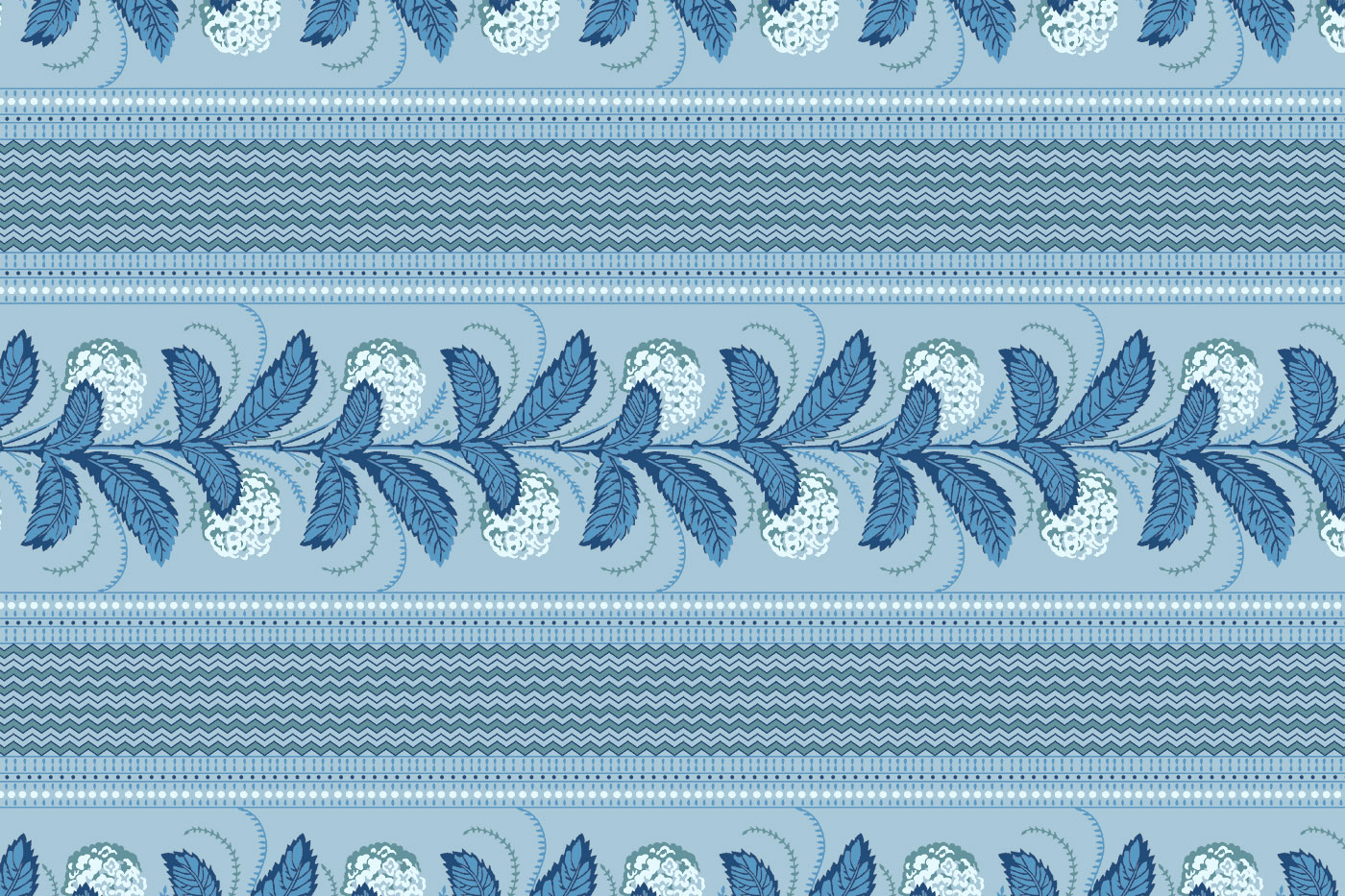

Border Print Designs: Traditional Borders, Patterns & Textile Applications
Explore Border Print Designs
Production-ready border print designs for fashion, fabric printing and contemporary collections — featuring floral vines, geometric bands, paisley borders, ethnic motifs, stripes and decorative repeat structures.
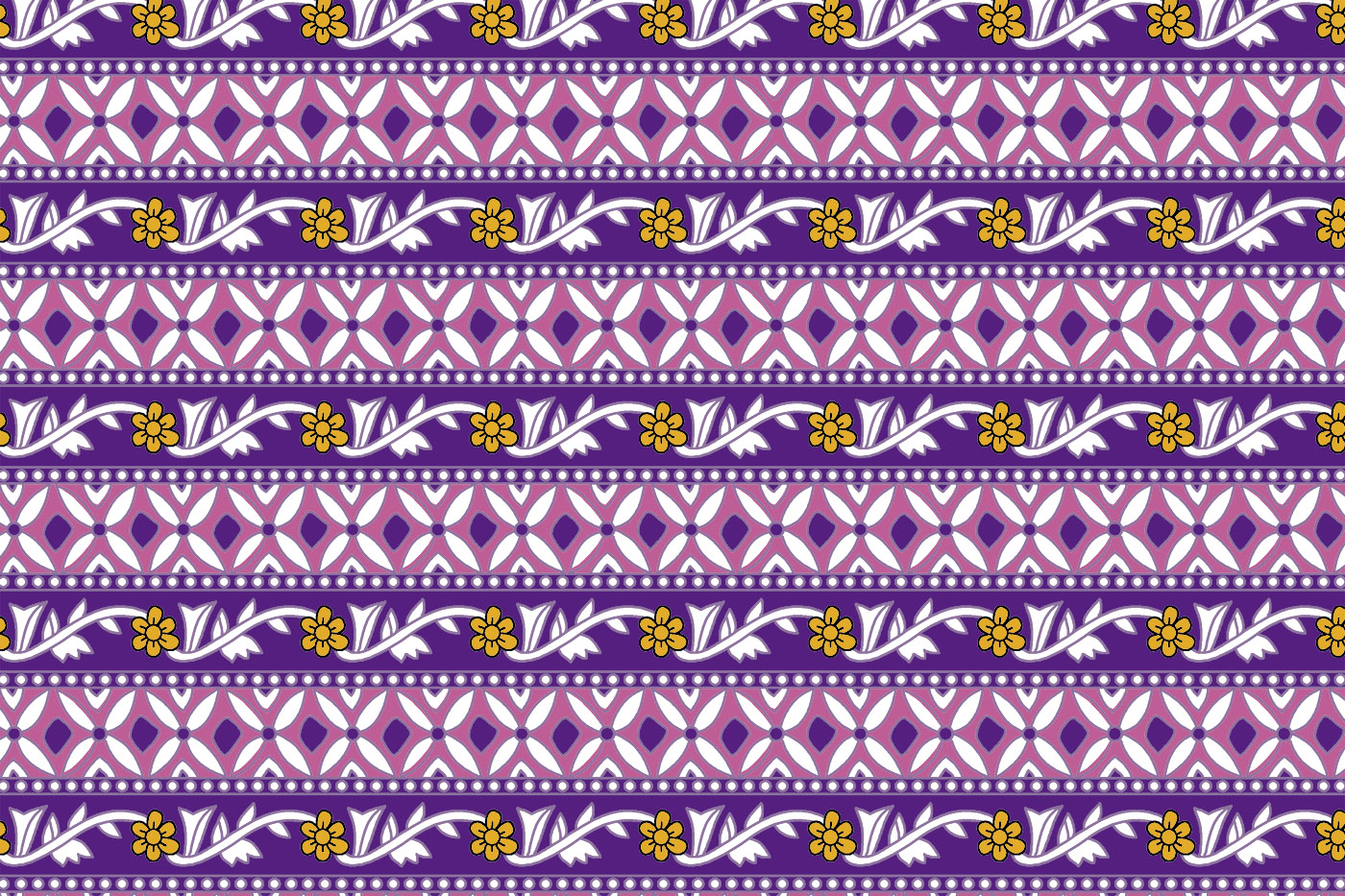
Patola Ikat Border Pattern
View Design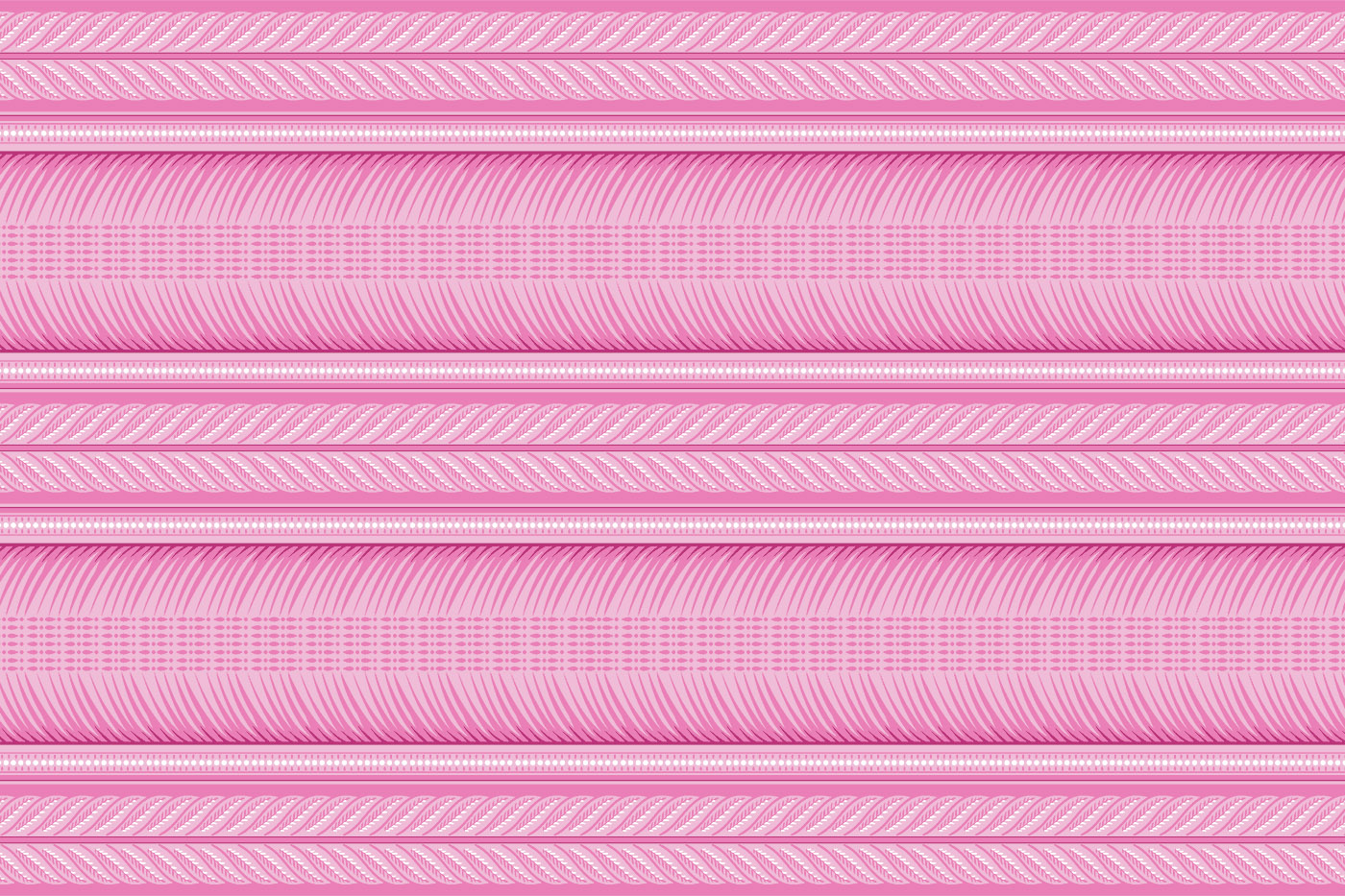
Jaipuri Decorative Border
View Design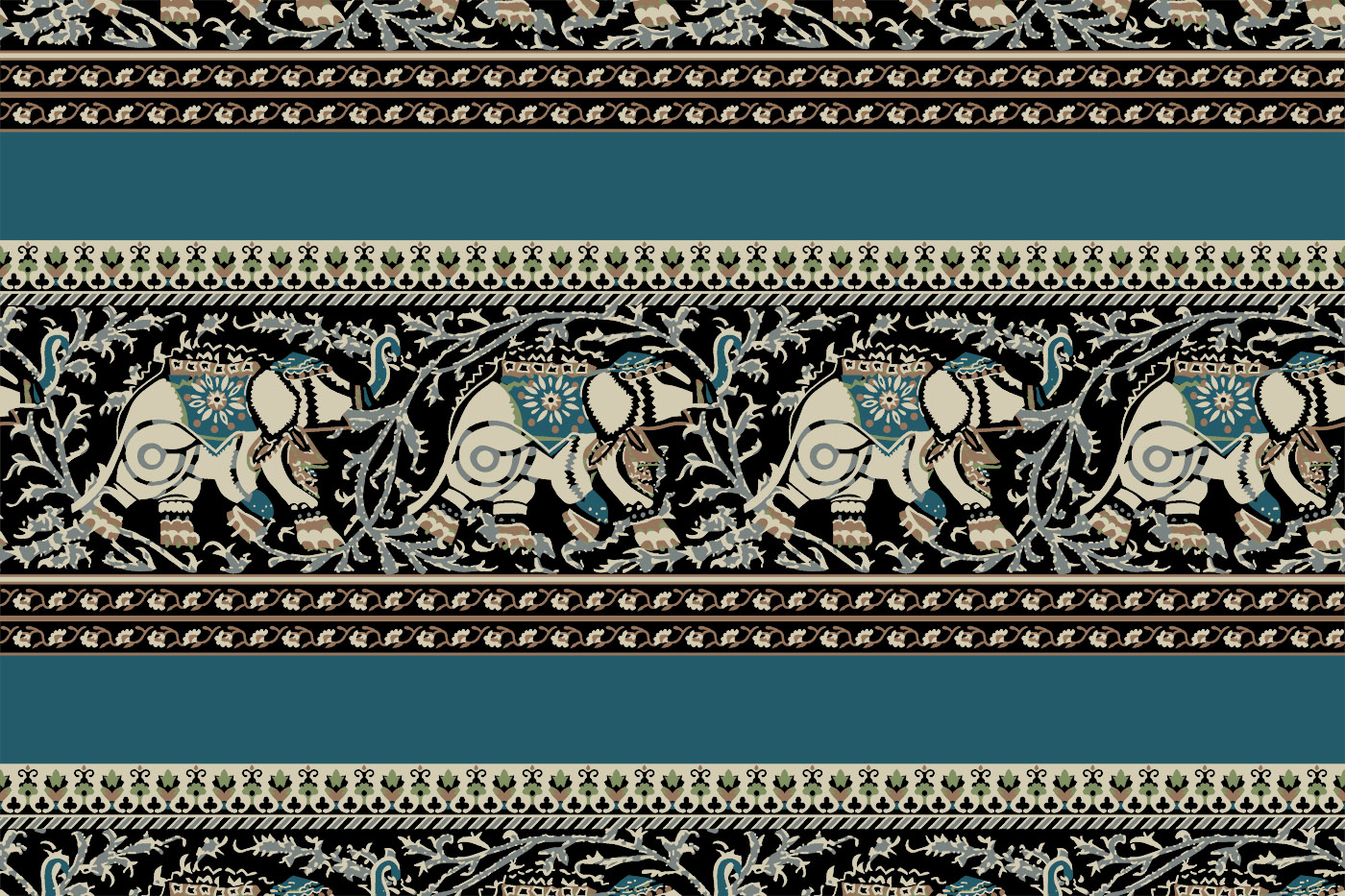
Rajasthani Elephant Border Print
View DesignWhat if tiny tied points could transform a plain fabric into a rhythm of dots, waves, grids and colour?
Floral vines. Paisley forms. Geometric bands. Folk motifs. Layered stripes. Border prints bring these elements together in a controlled linear format that frames, separates and enhances textile surfaces.
A border print is a directional textile design developed as a continuous or repeatable band. Unlike an all-over print, the artwork is arranged to create a clear edge, stripe, frame or decorative pathway. Border designs can draw from floral, paisley, geometric, folk, Mughal-inspired, Patola-inspired, Jaipuri and other Indian textile languages.
This article explores the structure of border print designs, how a decorative border is developed from motif selection to repeat construction, the role of symmetry and spacing, and how production-ready digital border patterns can be applied across fashion, garments, accessories and home textiles.
What Makes Border Prints Different?
Four defining characteristics help distinguish border prints from ordinary all-over textile patterns.
◆
Colour Contrast
A strong base colour helps the border read clearly against the fabric ground. Designers can use deep blue, maroon, black, green, rust, purple or neutral tones depending on the collection direction.
◈
Motif Placement
Motif placement, scale and spacing determine how a border flows across the fabric. Small repeating units create a refined edge, while larger motifs create a statement border suitable for sarees, dupattas, panels and statement garments.
▣
Repeat Structure
Traditional Indian border languages often work with rich, contrasting colour stories, while contemporary textile collections can reinterpret the same motifs through pastels, neutrals, monochromes and fashion-forward colourways.
☰
Directional Motif Language
Border prints are recognised by their directional composition. Common visual directions include floral vines, paisley, leaves, geometric bands, stripes, arches, folk figures, buti arrangements and ornamental separators.
How Border Print Designs Are Developed — The Journey of the Artwork
A border print is developed through a structured design workflow. The exact process varies by design style and production method, but the following stages explain how a decorative border can move from concept to production-ready artwork.
1
Define the Application
The project begins with the intended fabric, garment area and final use in mind. The designer considers the fabric width, border position, scale, repeat size and whether the border will run along a hem, neckline, sleeve, dupatta, panel or fabric edge.
2
Select the Motif Direction
A visual direction is selected and the primary motif family is established. Floral, paisley, geometric, folk, botanical or ornamental elements are arranged into a clear directional composition.
3
Build the Border Unit
The main border unit is constructed by arranging motifs along a baseline or central axis. Supporting stripes, dots, leaves, separators and secondary ornaments are added to create hierarchy without making the border visually crowded.
4
Test the Repeat
The border unit is then repeated horizontally to test continuity. Motifs are aligned so the join is visually clean and the decorative rhythm remains consistent across the full width of the repeat.
5
Develop Colourways
Colourways are developed after the structure is stable. Background, main motif and accent colours are balanced so the border remains readable at both close viewing distance and garment scale.
6
Check Scale & Spacing
The artwork is checked at actual repeat size and at garment scale. This stage helps identify awkward gaps, crowded motifs, broken lines or uneven spacing before final delivery.
7
Clean the Artwork
The final repeat is cleaned, aligned and prepared for production. Edges, joins, motif overlaps and colour separations are inspected so the border can reproduce consistently in the chosen printing workflow.
8
Prepare the Production File
If multiple colourways or alternate versions are required, the same master border can be separated into editable colour groups. This makes it easier to prepare coordinated versions for different fabrics, seasons or garment collections.
The Border Print Design Journey at a Glance
A simplified visual summary of the design sequence that transforms an initial motif idea into a finished, repeat-ready border print.
Define Use
→
Choose Motifs
→
Build Border
→
Create Repeat
→
Add Colourways
→
Check Scale
→
Proof Artwork
→
Prepare File
→
Finish
→
Border Print
A production border workflow typically moves through concept, motif development, directional arrangement, repeat construction, colour development, proofing and final production preparation.
Border Print Colour Palettes — Heritage Tones & Contemporary Colourways
Border prints can support almost any colour direction because the motif structure is independent of a single dye tradition. Heritage-inspired collections often use indigo, maroon, rust, mustard, green, black and cream, while contemporary ranges may use pastels, neutrals and monochromatic palettes.
Blue
Deep blue creates a strong base for floral, geometric and ornamental border motifs and works particularly well with lighter accents.
Untie / Madder
Red and maroon create a rich festive direction and are often used for heritage-inspired floral, paisley and ornamental borders.
Green & Maroon
Green, rust, mustard and maroon can be combined with cream or lighter accents to create an earthy Indian textile palette.
Yellow & White
Mustard, yellow, ivory and white can be used as highlights, separators or motif fills to keep a detailed border visually open.
The Precision Behind a Strong Border Print
A successful border print depends on controlled spacing, repeat accuracy, motif scale and a clear visual hierarchy.
Motif → Finish → Jaal → Border
- Directional rhythm — motifs are arranged along a clear horizontal or vertical pathway.
- Repeat continuity — the end of one unit connects naturally to the beginning of the next.
- Motif hierarchy — primary florals, paisleys or figures are supported by secondary stripes and separators.
- Negative space — controlled gaps keep detailed borders readable instead of overcrowded.
- Scale control — motif size is balanced against garment width, border placement and final viewing distance.
Why Border Print Design Requires Precision
Border prints require precision because even a small spacing error can become obvious when a directional pattern repeats across a garment. Baselines, motif joins, stripe widths, negative space and repeat edges must remain controlled.
This precision is what allows a border to look intentional from one end of a garment to the other. Production-ready digital artwork can preserve that structure while giving designers editable colourways and repeat-ready files for sampling and manufacturing.
Border Prints Today — From Heritage Motifs to Modern Textile Design
Border prints remain useful across traditional clothing and contemporary fashion because they can define garment edges, panels and decorative zones. Their linear structure makes them especially adaptable to sarees, dupattas, kurtis, dresses, sleeves, necklines and home-textile accents.
Traditional & Fashion Uses
- Sarees & Dupattas
- Lehengas & Ethnic Apparel
- Stoles & Scarves
- Turbans & Accessories
Modern Textile Applications
- Border-inspired repeat patterns
- Garment panels and placement designs
- Home textiles and accessories
- Contemporary surface design and digital textile printing
Ready-to-Print Border Designs — Time and Cost Saved
Recreating a detailed border digitally can require motif construction, directional alignment, repeat development and multiple colourway preparations. A ready-made production-oriented border can reduce artwork preparation before sampling.
DesignShatter's Border Prints collection includes digital textile patterns for modern textile workflows. Current product pages specify details such as PSD format, 300 DPI resolution, seamless repeat, RGB/CMYK profiles and editable channels where applicable.
Using a ready-to-print border can help designers move faster from inspiration to sampling. Individual product specifications should be checked on the relevant DesignShatter product page before production, including file type, resolution, repeat size, channels and usage terms.
Border Directional textile structure
300 DPI Print-ready product option
PSD Editable design format on applicable listings
Repeat Seamless options on applicable designs
Border Print Designs for Modern Textile Projects
Looking for border print designs that are already production-ready?
Frequently Asked Questions
What is a Border Print?
A border print is a directional textile pattern arranged as a decorative band or edge. It can feature floral, paisley, geometric, folk, botanical or ornamental motifs and may be designed as a continuous repeat.
Where are Border Prints used?
Border prints are used across fashion and home textiles, especially on sarees, dupattas, kurtis, dresses, sleeves, necklines, hems, panels, scarves, accessories and decorative fabric areas.
How is a Border Print designed?
A border is developed by selecting motifs, arranging them into a directional band, building a repeat, balancing negative space, developing colourways, checking the repeat and preparing the final artwork for production.
What styles can be used in Border Prints?
Border prints can use floral vines, paisley, geometric bands, folk figures, botanical motifs, Patola-inspired geometry, Jaipuri ornament, Mughal-inspired elements and many other decorative directions.
What colours work well for Border Prints?
There is no fixed palette. Heritage-inspired combinations can use indigo, maroon, rust, mustard, green, black and cream, while contemporary collections may use pastels, neutrals or monochromatic colourways.
How many stages are involved in creating a Border Print?
There is no single fixed number of stages. A typical digital workflow may include concept development, motif drawing, directional arrangement, repeat construction, colour development, proofing, cleanup and production-file preparation.
Are Border Prints only hand-made?
No. Border prints can originate from hand-drawn, hand-block-inspired, vector, digitally illustrated or mixed-media artwork. Digital border designs can then be prepared as repeat-ready production files.
What makes a Border Print different from an Allover Print?
An all-over print distributes motifs across the full surface, while a border print is deliberately directional and concentrated into a band or edge. This makes border designs useful for hems, necklines, sleeves, dupattas, panels and garment framing.
Latest Post


