

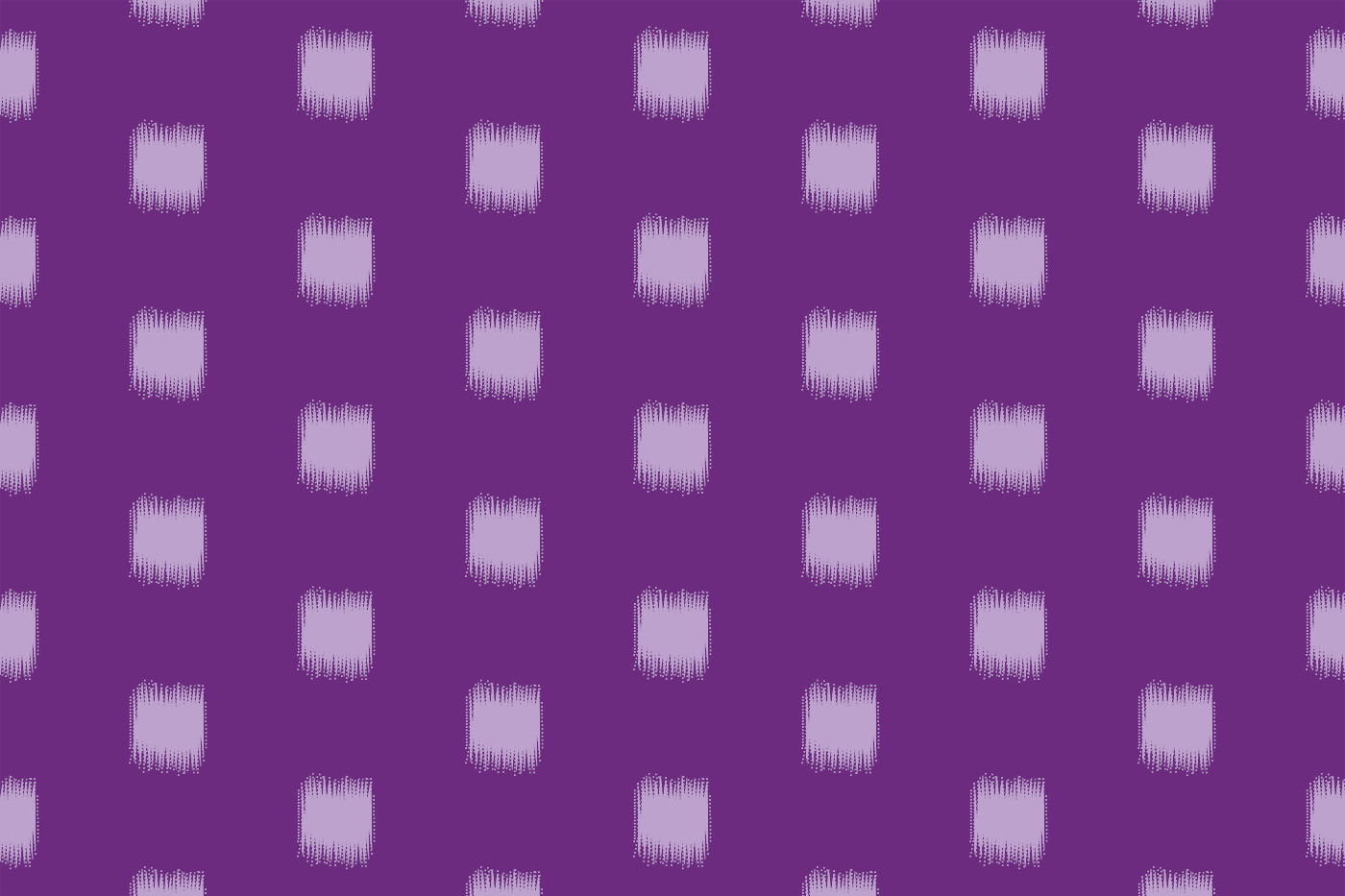

Ikat Textile Prints: From Resist-Dyed Yarn to Modern Fashion Design
Explore Ikat Textile Designs
Production-ready Ikat-inspired patterns for fashion, fabric printing and contemporary textile collections — built around the distinctive rhythm of resist-dyed threads, geometric movement and woven pattern.
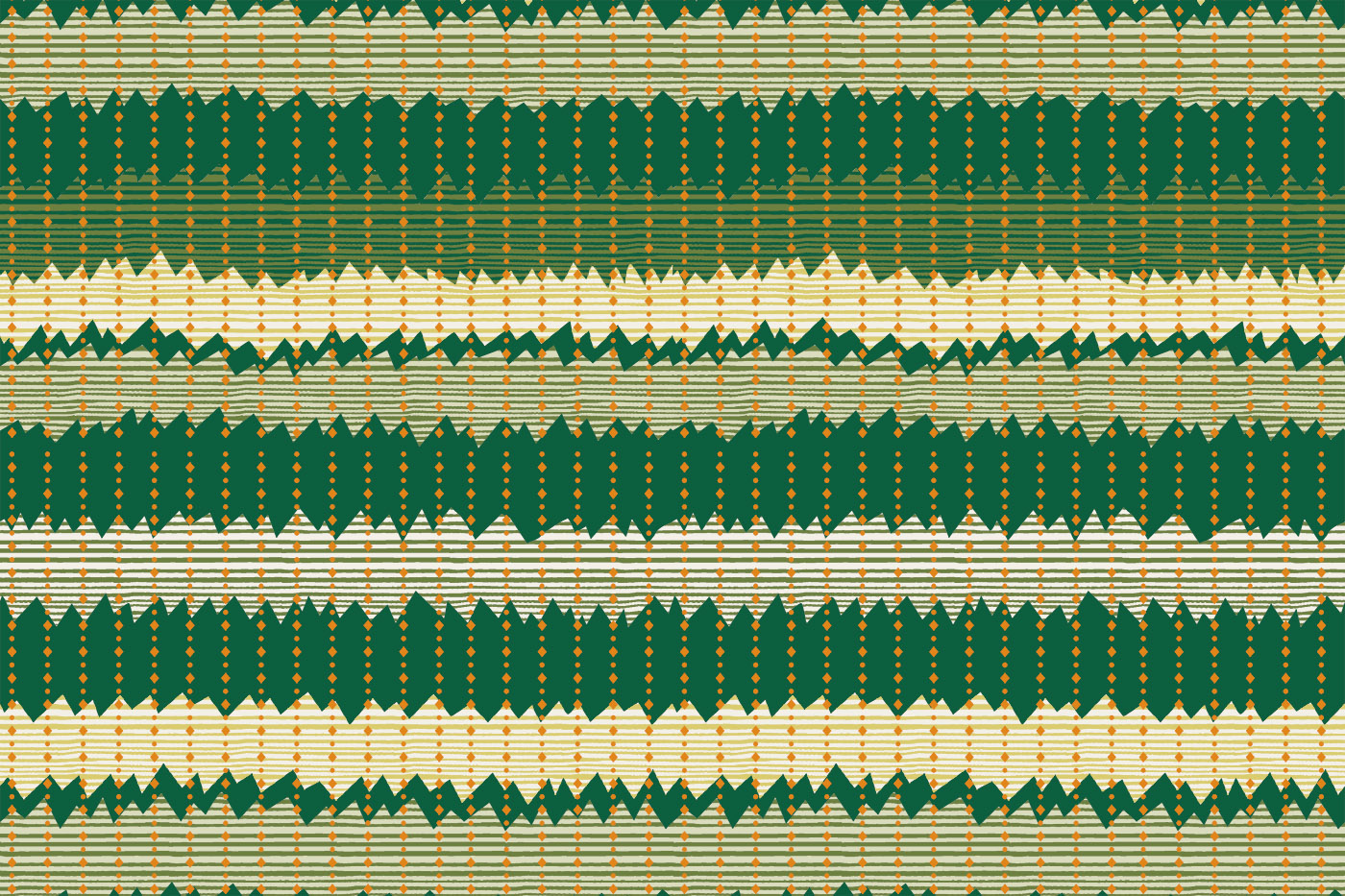
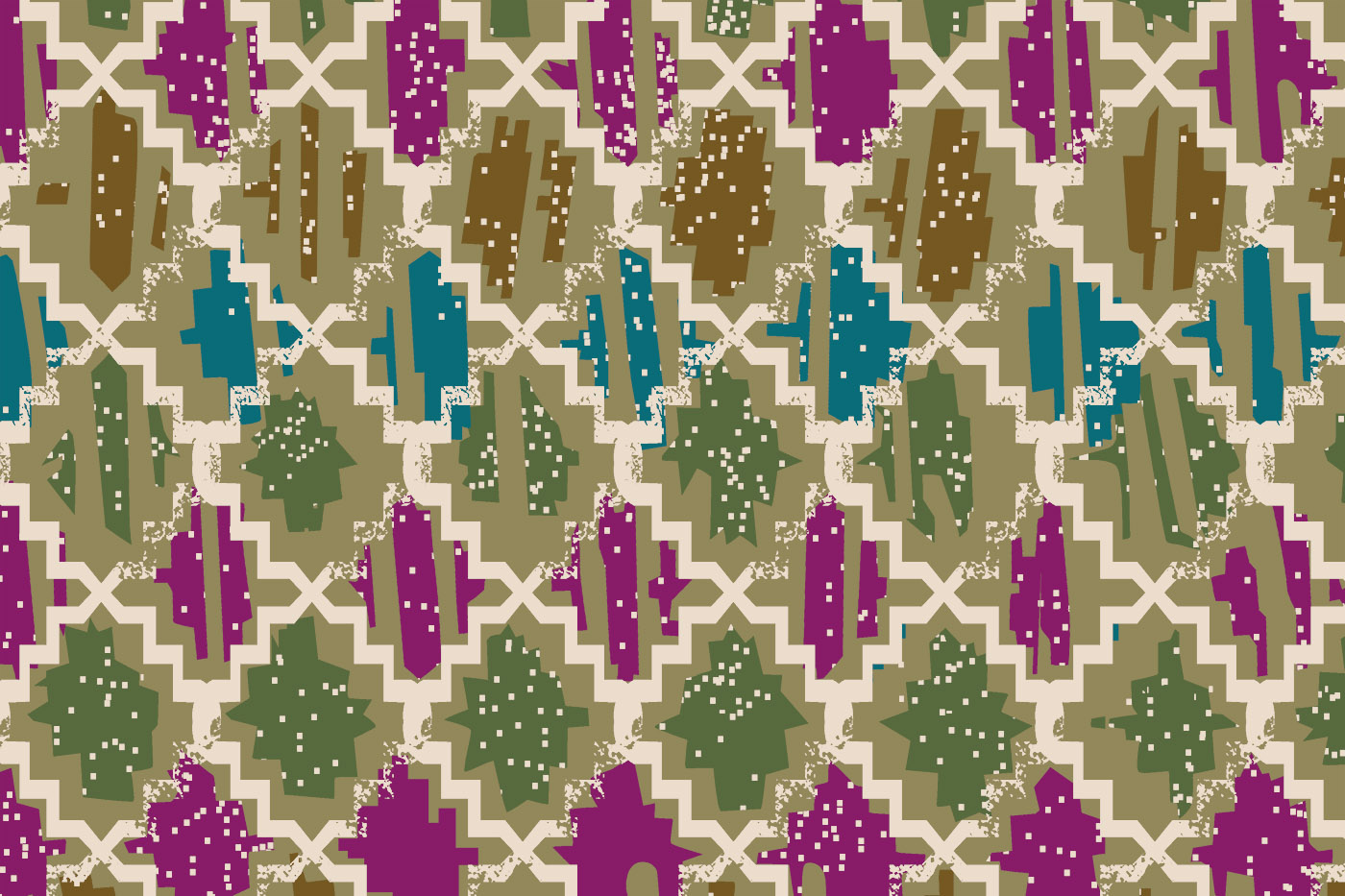
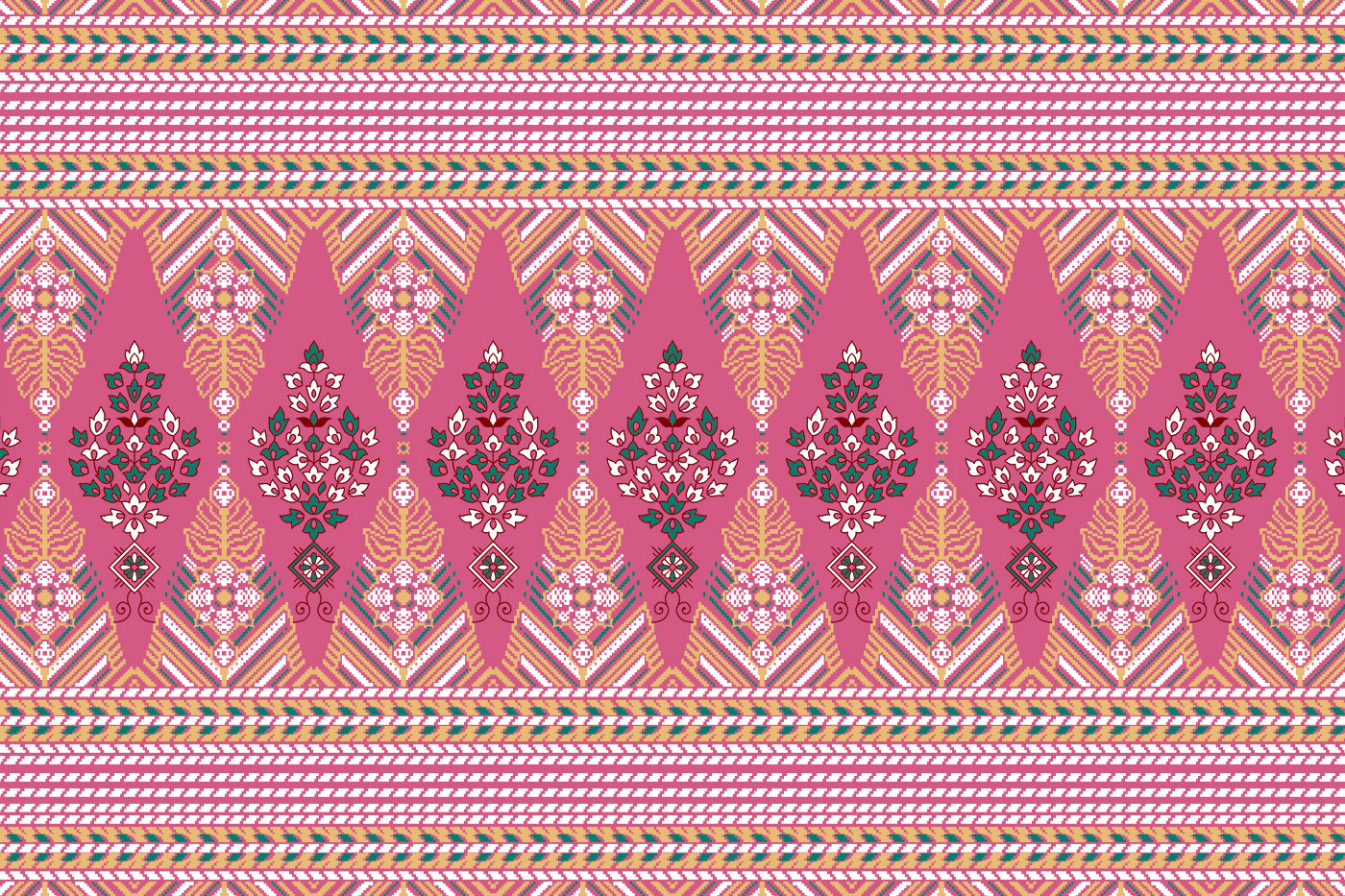
What makes Ikat look slightly blurred, perfectly imperfect and unmistakably woven?
It begins before the cloth is woven — with threads that are planned, tied, protected and dyed to carry the future pattern.
Ikat is a resist-dyeing technique in which sections of yarn are tightly bound before dyeing so that selected areas resist colour. The dyed yarns are then arranged on the loom, and the pattern appears as warp, weft, or both systems are woven together. The technique is found across many textile cultures, so Ikat is better understood as a family of methods than as one single regional style.
This article looks at what makes Ikat different, how the thread-level process works, why its characteristic edges matter in fashion, and how Ikat-inspired digital textile designs can translate the woven language into modern apparel and surface-pattern collections.
What Makes Ikat Different?
Ikat creates its visual identity before and during weaving rather than simply placing a finished motif on top of fabric.
◆
Resist-Dyed Yarn
Selected sections of yarn are tied or wrapped so dye cannot penetrate those areas. When the bindings are removed, the coloured and protected zones become the building blocks of the final motif.
◈
Warp, Weft or Both
Warp Ikat patterns the lengthwise yarns, weft Ikat patterns the crossing yarns, while double Ikat controls both systems. Each method changes the way the motif develops on the loom.
▣
Soft Pattern Edges
Because colour is carried by pre-dyed yarns and then assembled through weaving, Ikat commonly has softened, feathered or slightly irregular edges instead of the hard outline of a surface print.
☰
Pattern Through Structure
The motif is connected to the yarn arrangement itself. Alignment, tension and the order of warp and weft determine how accurately the intended geometry appears in the finished cloth.
How Ikat Is Made — From Yarn to Woven Pattern
Unlike a conventional surface print, Ikat begins at yarn level. The sequence below shows the core logic; exact methods vary by region, fibre, design and workshop.
1
Prepare the Yarn
Yarns are selected and prepared for the intended weave structure. The fibre, yarn count and tension affect how clearly the resist-dyed pattern will register during weaving.
2
Plan the Motif
The design is translated into a sequence of colour zones along the yarn. This planning stage is critical because the finished motif will be reconstructed from the dyed threads rather than printed afterward.
3
Bind the Resist Areas
Sections of yarn are tightly tied or wrapped to prevent dye from reaching them. More complex patterns require careful positioning of multiple resist sections along the yarn bundle.
4
Apply the First Colour
The prepared yarn is immersed in or exposed to a dye. Bound areas resist the colour while exposed areas absorb it, creating the first colour map within the yarn.
5
Re-Bind for Additional Colours
After one colour is established, selected sections may be bound again before another dye stage. Repeated resist and dye cycles allow several colours to be built into the same yarn system.
6
Arrange the Dyed Yarn on the Loom
The dyed warp or weft yarns are positioned so their colour zones correspond with the planned repeat. Accurate arrangement is essential because the woven alignment determines the final visual pattern.
7
Weave and Reveal
As the loom interlaces warp and weft, the separated colour zones begin to connect into diamonds, stripes, zigzags, chevrons and other motifs. Slight movement between yarns can produce the characteristic Ikat softness.
8
Finish the Fabric
After weaving, the textile is finished according to its fibre and intended use. The final cloth retains the visual relationship between resist-dyed yarn, weave structure and motif.
The Ikat Process at a Glance
The key difference is simple: the pattern is encoded into the yarn before the loom turns those yarns into cloth.
Design Map
→
Prepare Yarn
→
Bind Resist
→
Dye
→
Re-Bind
→
Re-Dye
→
Set on Loom
→
Weave
→
Ikat Textile
The exact sequence changes between warp, weft and double Ikat traditions, but the defining principle remains resist-dyeing the yarn before the pattern is revealed through weaving.
The Colour Language of Ikat
Ikat does not depend on one fixed palette. Its identity comes from the interaction of colour blocks, yarn movement and woven structure.
Indigo & Blue
Strong depth for heritage-inspired fashion, contemporary ethnicwear and sophisticated woven-look surfaces.
Red & Rust
Warm contrast that works well with geometric motifs, festive apparel and statement textile collections.
Black & Charcoal
Sharpens diamonds, stripes and graphic geometry while giving Ikat-inspired designs a modern fashion direction.
Natural & Neutrals
Creates breathing space around the motif and supports minimal, premium and resort-oriented collections.
The Geometry Behind Ikat
Ikat geometry is engineered in the yarn plan before weaving. Colour intervals are mapped, resisted and dyed first; only after the yarns are aligned does the complete motif emerge.
Thread → Colour → Alignment → MotifThe pattern is encoded into yarn before the loom reveals it.
Warp IkatWeft IkatDouble IkatSoft Edge
- Diamonds & chevrons — Angular repeats create movement and a strong graphic identity.
- Stripes & bands — Directional layouts control rhythm across the fabric width or garment.
- Broken-edge effect — Small shifts in dyed yarn positions create Ikat’s characteristic softened contour.
- Motif registration — Warp and weft colour zones must meet correctly as the fabric is woven.
- Scale matters — Micro-Ikat and large geometric repeats create very different effects on garments.
Why Ikat Requires Precision Before Weaving
The most demanding part of Ikat happens before the loom does its visible work. The resist positions must be calculated and tied so that the colour zones land in the intended relationship after dyeing and weaving. A small shift in yarn alignment can change the width, symmetry or meeting point of a motif.
This is also what gives Ikat its distinctive character. Unlike a perfectly registered surface print, the textile can retain controlled irregularity and softened transitions. In fashion, that visual softness can make a geometric print feel more tactile, artisanal and woven even when the design is interpreted digitally.
Ikat Today — From Woven Heritage to Fashion Print
Ikat is highly useful to fashion designers because its woven visual language can be translated into repeat prints, placement layouts and multiple colourways for commercial collections.
Fashion Applications
- Kurtis and ethnicwear
- Shirts, dresses and co-ord sets
- Dupattas, stoles and scarves
- Statement panels and placement prints
- Resortwear and Indo-Western collections
Modern Textile Applications
- Seamless all-over fashion prints
- Digital textile printing
- Home furnishing and upholstery
- Accessories and lifestyle products
- Contemporary surface pattern collections
Collection Development
Use Ikat-inspired repeats for kurtis, ethnicwear, shirts, dresses, co-ord sets, resortwear and Indo-Western collections.
Garment Engineering
Directional stripes and geometric layouts can be adapted for kurti fronts, yokes, sleeves, dupattas, panels and coordinated sets.
Commercial Production
Editable digital files make it easier to test colourways, scale and placement before sampling and bulk fabric production.
Fashion workflow advantage: concept → colourway → sampling → production can stay inside one digital design workflow.
Ready-to-Print Ikat Designs — From Woven Inspiration to Faster Production
Recreating a convincing Ikat-inspired pattern from scratch takes time: repeat construction, colour mapping, softened edges, separations and production testing all have to work together. For complex custom development, 8–10 hours can disappear before a usable production direction is ready.
DesignShatter supplies high-resolution, production-ready textile designs with seamless repeat structure and editable colour channels. Designers can refine colour, scale and placement instead of rebuilding the complete pattern from zero.
For individual designs, the working price range can stay accessible depending on the design and licence. The real production advantage is time: a ready pattern can move into sampling much faster than a design developed from scratch.
8–10 hrsTypical custom design development benchmark
$1–10Accessible individual design price range
5–10 minTypical light colour / scale customisation
300 DPIHigh-resolution print-ready workflow
Ikat Designs for Modern Textile Projects
Explore Ikat-inspired textile patterns developed for fashion, garment sampling, fabric printing and contemporary surface design.
Current DesignShatter offers: Buy 3 Designs & Save 25% — DSBUY3SAVE25 · New User: 10% OFF — DSWELCOME20 · Selected campaign: FREEDOM50
Browse All Ikat Designs →Frequently Asked Questions
What is Ikat?
Ikat is a resist-dyeing textile technique in which sections of yarn are bound before dyeing. The dyed yarns are then woven to reveal the planned pattern.
Is Ikat printed on the fabric?
Traditional Ikat is not simply a surface print. The pattern is created by resist-dyeing yarns before weaving, so the colour arrangement becomes part of the woven textile structure.
What is warp Ikat?
In warp Ikat, the warp yarns are tied and resist-dyed before the weft is woven across them. The prepared warp establishes the main pattern along the length of the textile.
What is weft Ikat?
Weft Ikat applies the resist-dye process to the weft yarns. As those yarns are inserted across the warp, their colour zones build the pattern across the fabric.
What is double Ikat?
Double Ikat involves resist-dyeing both warp and weft yarns. Because both systems carry pattern information, the two sets of motifs must align during weaving, making the construction especially complex.
Why do Ikat patterns have blurred edges?
The slightly softened edge is a characteristic effect of the resist-dyed yarns and their alignment during weaving. Small shifts between colour zones can create the familiar feathered or irregular boundary.
Which motifs are common in Ikat?
Ikat traditions vary widely, but geometric compositions such as diamonds, chevrons, stripes and stepped forms are common. Different regions also develop their own floral, figurative and symbolic pattern languages.
Can Ikat-inspired designs be used for modern fashion?
Yes. Ikat's geometric rhythm and woven character translate well into kurtis, dresses, shirts, co-ord sets, dupattas, accessories, home textiles and contemporary digital surface patterns.
Are production-ready Ikat-inspired digital designs available?
DesignShatter offers Ikat-inspired digital textile designs intended for textile printing and fashion design workflows, including production-oriented files and seamless repeat options where specified on the individual product.
Latest Post


