

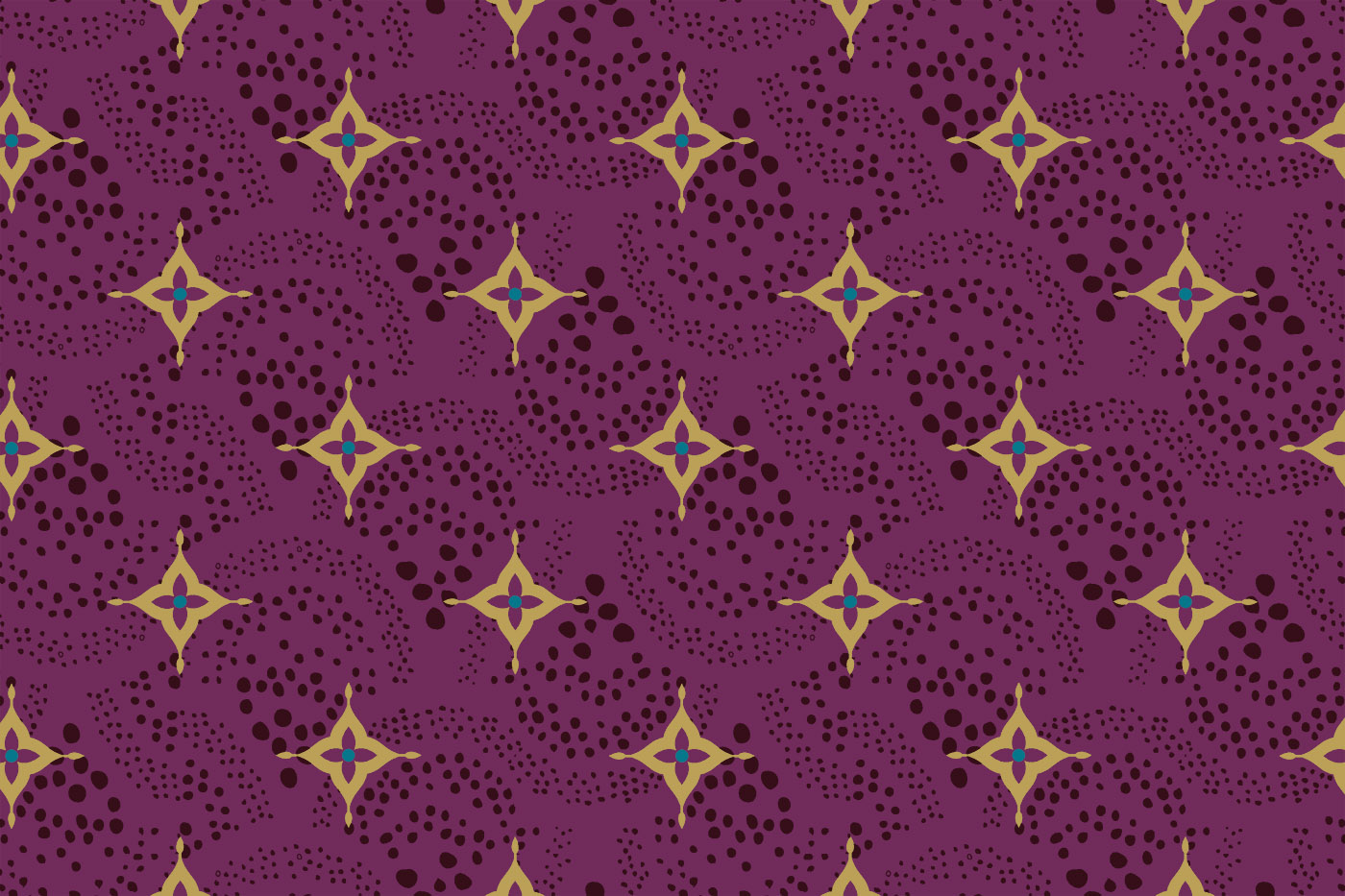

Ajrakh Textile Printing: History, Process, Colours & Modern Design
Explore Ajrakh Textile Designs
Production-ready Ajrakh-inspired patterns for fashion, fabric printing and contemporary textile projects — rooted in the centuries-old craft of indigo, geometry and hand-block printing.
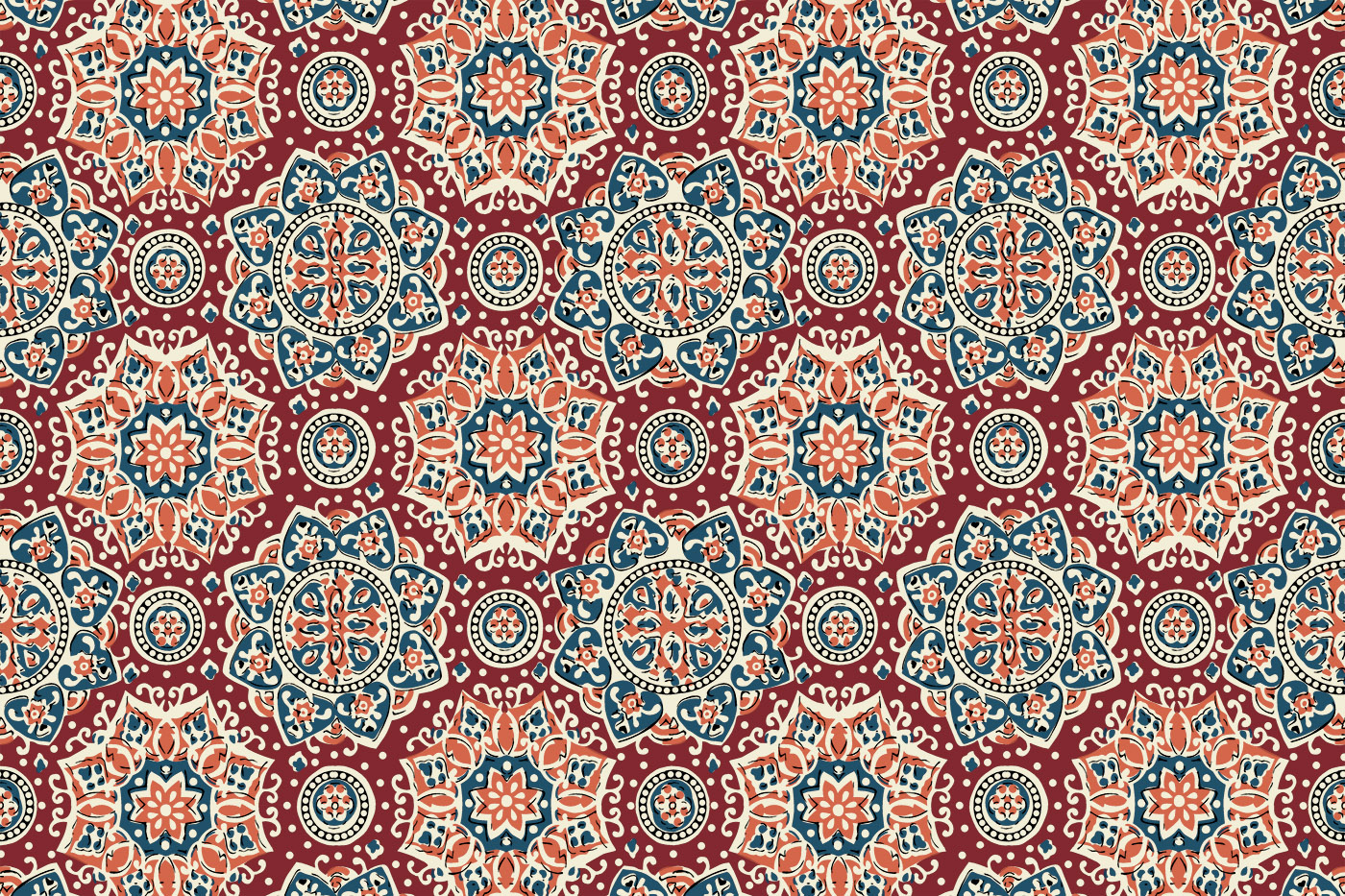
Ajrakh Mandala Floral
View Design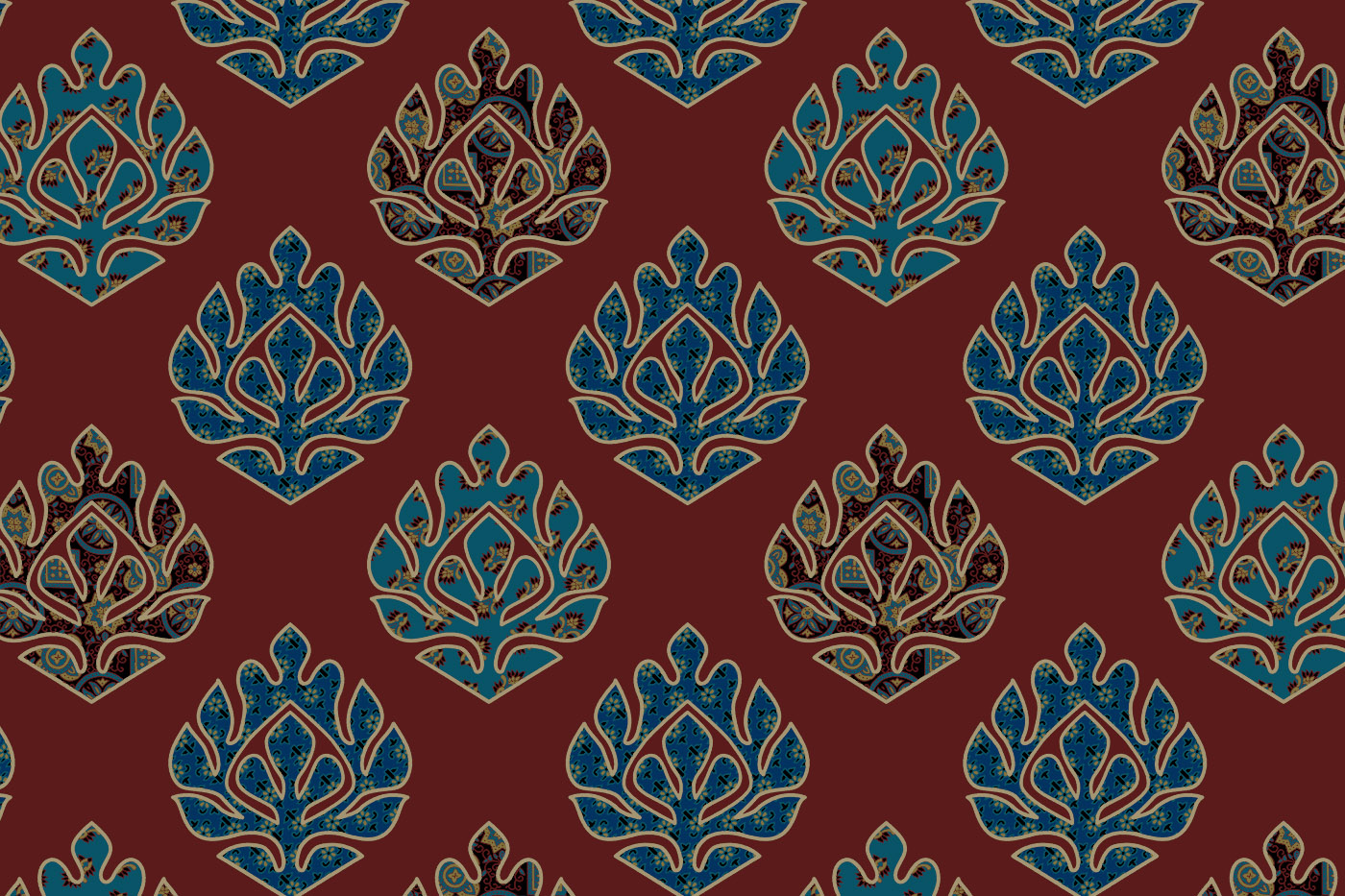
Ajrakh Lotus Butta
View Design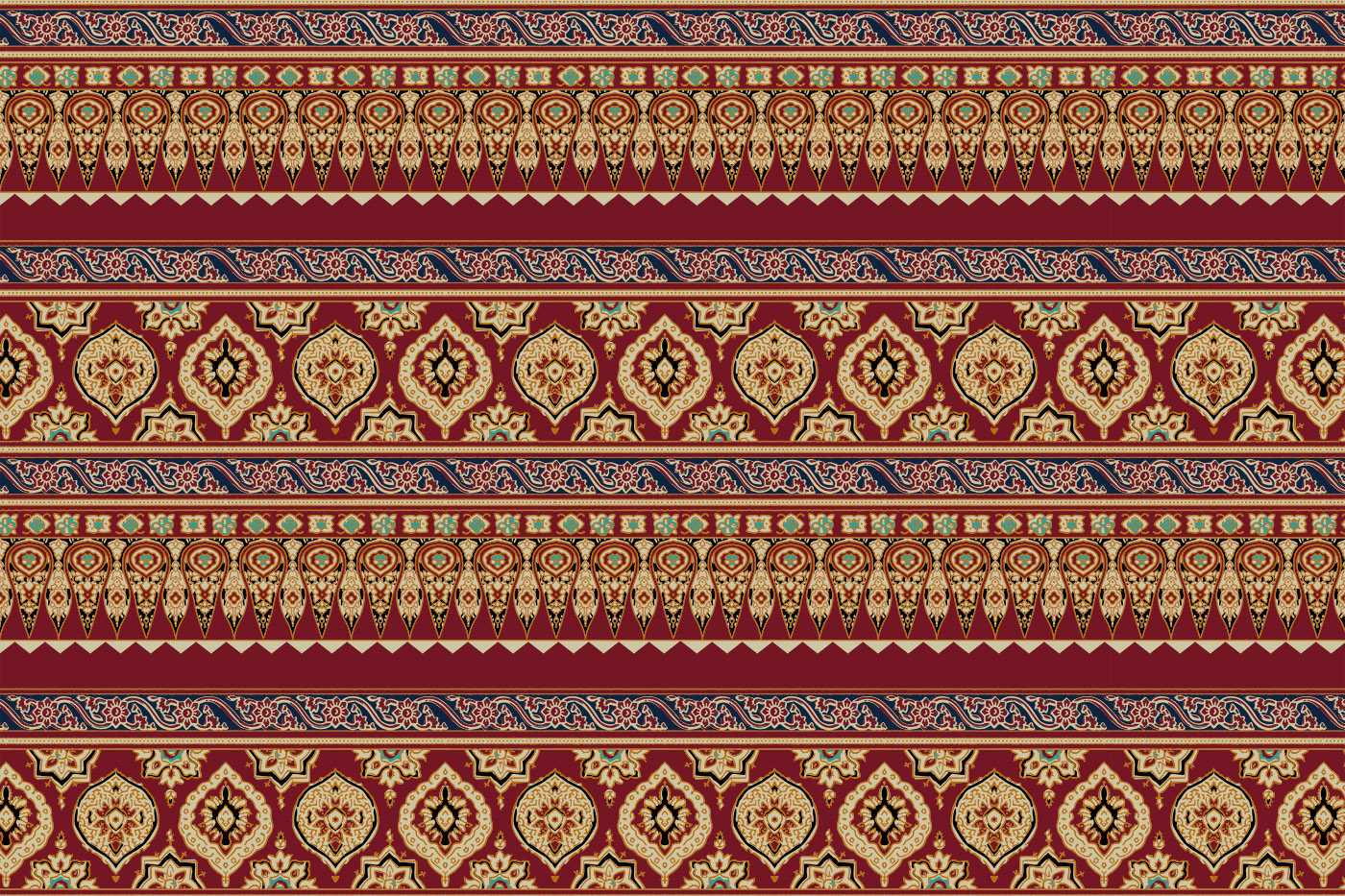
Ajrakh Decorative Border
View DesignWhat if a textile pattern was not simply printed, but slowly built layer by layer?
Deep indigo. Earthy red. Black. White. Geometric symmetry that feels both mathematical and organic.
Ajrakh is more than a block print. It is a carefully constructed textile tradition in which printing, resist, dyeing and washing are repeated until the final pattern emerges with depth and clarity. Originating in the Kutch region of Gujarat (with historical roots extending to Sindh), Ajrakh remains one of the most exacting hand-block printing practices still practised today.
This article explores the distinctive character of Ajrakh, the multi-stage process that creates it, the geometry that defines its motifs, and how contemporary designers can work with Ajrakh-inspired patterns that are already production-ready.
What Makes Ajrakh Different?
Four defining characteristics set Ajrakh apart from ordinary block printing.
◆
Indigo
Deep blue remains one of Ajrakh’s signature colours. Traditional indigo dyeing, often fermented in clay or copper vessels, gives the fabric its characteristic depth and luminosity.
◈
Geometry
Stars, jaalis, floral motifs and symmetrical repeats create a structured yet rhythmic surface. Precise registration of wooden blocks is essential to maintain alignment across the cloth.
▣
Resist Printing
Certain areas are protected from dye by a resist paste (traditionally lime, gum and clay) applied with carved wooden blocks. These resisted zones appear as the white or lighter elements in the finished design.
☰
Layer by Layer
The final pattern develops through repeated cycles of printing, dyeing and washing. Documented traditional processes commonly involve 14 to 16 stages and can extend over several weeks.
How Ajrakh Is Made — The Journey of the Fabric
Traditional Ajrakh production is a sequential craft. While exact sequences vary between workshops and designs, the following stages illustrate the core journey.
1
Preparing the Fabric
Raw cotton is washed thoroughly to remove starch and impurities. It is often treated with a mixture containing camel dung, soda ash and castor oil (saaj), then sun-dried. This process may be repeated several times to soften the cloth and open the fibres.
2
Mordanting
The fabric is treated with myrobalan (harda) or similar natural mordants. This prepares the cloth to accept subsequent dyes and contributes to the final colour development.
3
First Resist
Wooden blocks are used to print a resist paste (commonly lime and gum arabic). These areas will remain undyed or appear white in the finished textile. For double-sided (bipuri) Ajrakh the process is repeated on the reverse.
4
Black
An iron-based paste (prepared from scrap iron, jaggery and tamarind) is printed to create the dark outlines and fine details that define the geometry.
5
Red
Alum or other mordants are printed for the red areas. When the cloth is later boiled with madder root (or alizarin), the red develops through a chemical reaction with the mordant.
6
Indigo
The fabric enters the indigo dye bath. Unresisted areas absorb the characteristic deep blue. Multiple dips and oxidation cycles may be used to achieve the desired intensity.
7
Washing & Sun Drying
Excess paste and unfixed dye are removed by thorough washing, often in running water. The cloth is then laid flat to dry in the sun, fixing the colours and revealing the emerging pattern.
8
Repeating the Process
Additional rounds of resist, printing, dyeing and washing may be performed. The final Ajrakh pattern emerges only after these successive layers have been completed. Traditional documentation frequently describes the complete cycle as comprising roughly 14–16 stages.
The Multi-Stage Journey at a Glance
A simplified visual summary of the sequence that transforms plain cotton into finished Ajrakh.
Plain Cotton
→
Wash
→
Mordant
→
Resist Print
→
Black
→
Red
→
Indigo
→
Wash
→
Repeat
→
Ajrakh
Government and craft documentation from Kachchh commonly describe Ajrakh as a process of washing, dyeing, printing and drying involving approximately sixteen stages, depending on design complexity and workshop practice.
Why Ajrakh Has Those Famous Colours
The traditional palette is restrained yet powerful. Each colour performs a specific visual and technical role.
Indigo
Deep blue character — the signature ground that gives Ajrakh its name association with “azrak” (blue).
Red / Madder
Warmth and contrast. Developed through mordant and madder (or alizarin) dyeing.
Black
Strong outlines and geometric definition, produced with iron-based pastes.
White / Natural
Breathing space created by resist areas that remain undyed.
The Geometry Behind Ajrakh
Ajrakh patterns are built on precise symmetry and repeating units that reward careful observation.
Motif → Repeat → Jaal → Border
- Symmetrical motifs — stars, medallions and floral forms organised around central axes.
- Jaal (net) — continuous all-over repeats that create a lattice-like surface.
- Borders — carefully proportioned edges that frame the main field.
- Block registration — each successive colour or resist must align accurately with the previous impression.
- Repeated units — the same carved block is used repeatedly, demanding consistent pressure and placement.
Why Hand Block Printing Requires Precision
An artisan must place each wooden block with exact registration. A slight misalignment becomes visible across the entire length of fabric. Traditional Ajrakh documentation emphasises the importance of skilled block carving, careful paste preparation, and the ability to maintain consistency through multiple stages of printing, dyeing and washing. The same block is often used for both sides of bipuri (double-sided) cloth, further increasing the demand for accuracy.
This precision is one reason authentic hand-block Ajrakh commands respect — and why modern production-ready digital files that capture the same geometric language are so valuable to designers who need reliable, scalable results.
Ajrakh Today — From Traditional Cloth to Modern Textile Design
The craft continues to move fluidly between heritage garments and contemporary applications.
Traditional Uses
- Dupatta
- Kurta and apparel
- Stole and shawl
- Turban and lungi
Modern Textile Applications
- Fashion prints and seamless patterns
- Garment panels and placement designs
- Home textiles (bed linen, curtains, upholstery)
- Contemporary surface design and digital printing
Ready-to-Print Ajrakh Designs — Time and Cost Saved
Creating a complex Ajrakh-style pattern from scratch — whether by traditional block methods or full digital recreation with proper layer structure and colour separations — can easily occupy a designer for 8–10 hours, and in many cases one to two full working days.
DesignShatter supplies production-ready Ajrakh-inspired textile designs as organised PSD files with editable colour channels. Files are delivered at high resolution (typically 300 DPI), ready for screen printing or digital textile printing. Designers can download a design, make light adjustments to colour, scale or motif placement if required, and move directly into production — often within minutes rather than days.
Pricing for individual designs is kept accessible (commonly in the low-dollar range), so the cost of acquiring a finished, print-ready file is a fraction of the labour required to build an equivalent pattern from zero. The platform records hundreds of Ajrakh-category downloads daily; the design team continuously releases new motifs across traditional and contemporary fields so that textile, fashion and surface designers can keep their collections current without repeatedly investing large blocks of time.
8–10 hrs Typical custom design time saved
$1–10 Accessible design pricing range
200–300+ Daily Ajrakh-style downloads
5–10 min Typical light customisation time
Ajrakh Designs for Modern Textile Projects
Looking for Ajrakh-inspired textile designs that are already production-ready?
Frequently Asked Questions
What is Ajrakh?
Ajrakh is a traditional Indian (primarily Kutch, Gujarat) and Sindhi hand-block printing and resist-dyeing technique characterised by deep indigo, red, black and white, geometric and floral symmetry, and a multi-stage process of printing, dyeing and washing.
Where did Ajrakh printing originate?
The craft is historically associated with the Kutch region of Gujarat and with Sindh. Documentary and oral traditions link it to long-standing textile practices in the region; some scholars also note visual parallels with earlier Indus Valley motifs.
How is Ajrakh printed?
It is printed with hand-carved wooden blocks using resist pastes and mordants, followed by dyeing (notably indigo and madder). The cloth passes through repeated stages of preparation, printing, dyeing and washing.
What colours are commonly used in Ajrakh?
The classic palette consists of deep indigo blue, madder red, black and the white or natural ground created by resist. Contemporary makers sometimes introduce additional natural or compatible colours.
How many stages are involved in Ajrakh printing?
Traditional accounts commonly describe 14 to 16 stages (and sometimes more), encompassing fabric preparation, mordanting, resist printing, colour development, indigo dyeing, washing and drying. Exact sequences vary by workshop and design.
Is Ajrakh hand block printed?
Yes. Authentic traditional Ajrakh is produced with hand-carved wooden blocks. The same geometric language is now also interpreted in digital, production-ready files for modern printing methods.
What is resist printing in Ajrakh?
Resist printing involves applying a paste (typically lime, gum and clay) that prevents dye from penetrating selected areas. After dyeing and washing, those protected zones appear as the lighter or white elements of the design.
Where can Ajrakh textile designs be used, and are ready-to-print files available?
Ajrakh-inspired designs are suitable for apparel, home textiles, accessories and surface design. DesignShatter offers production-ready PSD files with editable channels so designers can download, adjust lightly if needed, and print via screen or digital methods without rebuilding the pattern from scratch.
Latest Post


